
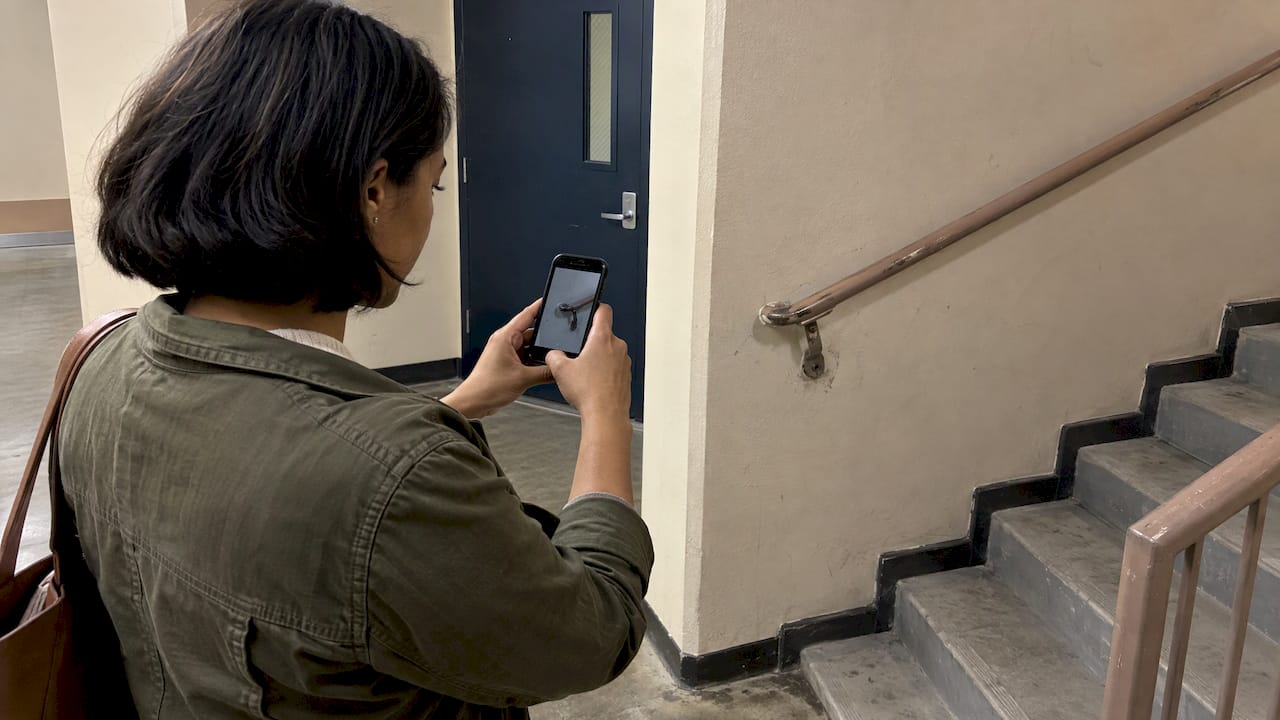
The photos you take in the first minutes after a crash, a fall in a store or any other injury are often the only record of what the scene looked like before it changed. Cars get towed, spills get mopped, and the lighting, the weather and the hazard itself disappear. If someone else’s carelessness hurt you, a clear set of photos taken safely, from far to near, with notes on when and where you took them, gives your claim a foundation that memory alone cannot. We are Summit Trial Attorneys in Las Vegas, and if you were hurt in Nevada, our free case review is a natural place to bring those photos.
Key Takeaways
- Photograph the scene before anything is moved or cleaned up, working from wide shots to close-ups and from several angles.
- Put a common object next to small hazards or damage for scale, and write down the date, time, place and weather while they are fresh.
- Your safety and medical care come first. No photo is worth standing in traffic or delaying treatment.
- Keep the original files, unedited, and back them up. Photos can help your claim and can also be used to question it, so take the full picture.
- After a store or property injury, report it and document the hazard quickly. Stores often keep their own video and records for a limited time.
Table of Contents
- Why scene photos matter after someone else’s negligence
- Safety comes before the camera
- What to photograph, step by step
- Photos after a fall or injury in a store
- Photos after a car, motorcycle or truck crash
- How photos can help, and how they can be used against you
- Keeping your photos usable
- When to bring in a lawyer
- Our perspective
- Bring your photos to Summit
- FAQ
- Sources
Why scene photos matter after someone else’s negligence
A personal injury claim comes down to proving what happened, who was responsible and how badly you were hurt. Insurance adjusters and defense lawyers start by looking for gaps in that story. A photo of the wet floor with no warning sign, the intersection with the blocked sightline, or the broken stair rail closes a gap that testimony alone leaves open.
The National Institute of Justice’s guide for scene investigators explains the principle well. It says scene photography creates a permanent historical record and corroborating evidence, and it calls for overall orientation photos, detailed photos of specific areas, shots from different angles and photos with scales. It also says to take them before anything is moved, and to note it when something already has been. The guide was written for death investigators, but the logic applies to anyone documenting a scene.
In Las Vegas, North Las Vegas, Henderson and the rest of Clark County, the speed of change is the main problem. A crash on a busy Strip-area road is cleared within the hour. A spill in a casino or a big-box store is cleaned within minutes. Hotel pools, parking garages and nightclub entrances are repaired and repainted. Your photos may be the last accurate record.
Safety comes before the camera
Get to a safe place, call 911 if anyone is hurt, and accept medical attention. Photos matter, but not more than your health.
There is a sobering example from the courts. In Elephant Insurance Co. v. Kenyon, the Supreme Court of Texas considered a case in which a man was killed while taking photos at a crash scene after his insurer asked for them. The court held that the insurer owed no duty to warn about the danger. The practical lesson is simple: never step into a travel lane, onto a highway shoulder or near moving equipment to get a picture. If you cannot photograph something safely, describe it in notes, or ask a passenger or witness to take the picture from a safe spot.
Similarly, the Oregon OSHA guidance quoted in the federal incident investigation guide says the victim is always the first consideration when securing a scene. If you are injured, someone else can take the photos, or you can do it later when you are able.
Two more practical points:
- Ask before recording people. The same federal guide says interviewees must give permission before being recorded. Photos of the scene are one thing. Recording a witness’s statement is another, so ask first.
- Do not argue at the scene. Photograph, exchange information and leave the disputes for later.
What to photograph, step by step
The federal incident investigation guide gives a method that works for a crash, a fall or a hazard on someone’s property. Its photo tips tell investigators to start with distance shots and then move in, shoot from multiple angles, take panoramic shots, include an item of known size for scale, and record details in notes kept with the photos. Here is how that looks in practice.
1. Start wide
Take several photos that show the whole scene and how it connects to its surroundings: the intersection, the aisle, the parking lot, the hotel hallway. Include street signs, store names, lane markings, traffic signals and lighting. These shots answer the question “where was this?” without anyone’s help.
2. Move to the middle distance
Photograph the vehicles in their final positions, the spill with the aisle around it, or the staircase from the top and bottom. Walk around the subject and shoot from the front, back, left and right, and from above if you can do so safely. Angles matter because a defense lawyer can argue that a single photo hides or exaggerates something.
3. Get close
Capture the specifics:
- Vehicle damage, including crumple points, broken glass, airbag deployment and license plates
- Skid marks, debris, fluid trails and gouges in the pavement
- The hazard itself: the liquid on the floor, the torn carpet, the missing handrail, the broken light
- Warning signs, or the absence of any, near the hazard
- Footwear, if you fell, and the surface you fell on
- Your injuries, including bruises, cuts and swelling, and again over the following days as they develop
Place a common object next to small items, such as a coin or a pack of cards. The federal guide’s own examples are a penny or a card pack for scale. A tape measure is even better for a pothole, a lip in a sidewalk or a gap in a floor.
4. Capture conditions
Weather, glare, darkness, wet pavement and crowding all explain how an incident happened. Take a photo that shows the lighting as it was, and note the weather. A nightclub entrance at 2 a.m. looks very different from the same entrance at noon, and it is the 2 a.m. version that matters.
5. Add the other evidence
Photograph any other driver’s insurance card, license plate and registration, and the names or badges of responding officers. If there are witnesses, photograph the scene with them in it, and get their names and phone numbers. Take a screenshot of any incident report number you are given.
6. Write notes immediately
The federal guide recommends recording the photo type, date, time, location, subject, weather and measurements in notes kept with the photos, and identifying the person who took them. A short note on your phone does the job: who took the photo, when, where, and what each set shows. A year later, when a claim is being negotiated, those notes keep the photos from becoming a pile of unlabeled images.

For a closer look at the same technique, including overall and close-up views, multiple angles, scale and the photographer’s identity, see this guide to documenting evidence with photographs.
Photos after a fall or injury in a store
People searching for a store injury lawyer usually want to know the same thing: what should I do right now? In a retail store, the evidence disappears quickly. Staff clean up, the display is rearranged, and the surveillance video gets recorded over on a routine schedule.
If you are hurt in a grocery store, big-box retailer, hotel lobby or casino:
- Get medical help first, and tell the providers exactly how you were hurt.
- Report the incident to a manager and ask that an incident report be written. Photograph the report if you are allowed to, or write down the name of the person who took it and the time.
- Photograph the hazard from a distance and up close: the wet spot, the cart, the loose tile, the dim stairwell. Include any warning cones or the lack of them.
- Photograph the surroundings: where the nearest employee was, whether there were mats, signs or cleaning supplies, and what the lighting was like.
- Note any cameras you can see overhead. You will not be able to collect the footage yourself, but knowing where the cameras are helps your attorney ask for it promptly.
- Keep your shoes and clothing from the day, unwashed, in a bag.
Why the rush? Courts have dealt with cases in which stores no longer had video of a fall. In one appeal, the Iowa Court of Appeals found no spoliation instruction was warranted where the store’s video and a note were unavailable under a neutral retention policy, and the plaintiff had filed suit almost two years after the fall. The lesson is not about one state’s law. It is that when a record is routinely deleted, the person who acts early has a much better chance of having it preserved. Letting a lawyer send a preservation request quickly is one of the most practical steps in a store injury case.
If you were hurt on someone’s property in Nevada, our page on when a property injury is not your fault explains the basics, and our slip and fall practice page describes the cases we handle in Las Vegas.
Photos after a car, motorcycle or truck crash
Crash scenes add vehicle evidence. Beyond the steps above, take photos of:
- Each vehicle from all four corners, including undamaged areas, so damage is placed in context
- Interior damage, such as a deployed airbag, a broken seat or a cracked windshield
- Tire marks and where they begin and end
- Traffic signals, stop signs and sightlines, standing where each driver would have been
- Any dashboard camera, if you have one, and the road ahead
Crashes involving commercial trucks involve more evidence than a phone can capture, such as logbooks and electronic data, which is why early action matters. We discuss that in our guide to Nevada semi-truck crash evidence. For the general routine after a wreck, see what to do after a Las Vegas car crash. If you were hurt on a motorcycle, our motorcycle accident page covers what we do for riders.
If the crash was in Henderson or North Las Vegas, our local guides on Henderson accidents and North Las Vegas accidents cover local reports and next steps.
How photos can help, and how they can be used against you
Photos carry weight in both directions, so take complete ones.
On the helpful side, they show hazards and damage that explain the injury. They also matter in disputes with your own insurer. In Adkins v. Erie Insurance, a federal court in Ohio found a jury question on bad faith after testimony that adjusters did not want to see photographs or video of water damage. In Redo v. State Farm, a federal court in Oklahoma found genuine disputes supporting a bad-faith claim where the insurer refused a second inspection despite its own file notes saying one was needed. These are other states’ cases and each turns on its own state’s law, but they illustrate a point that matters in Nevada bad faith claims too: when you hand an insurer clear photos, it has a duty to investigate reasonably, and what it does with them becomes part of the record.
On the other side, insurers use photographs too. In Brenman v. Demello, the New Jersey Supreme Court allowed photos of vehicle damage to be used to argue about how the damage related to the injuries, without requiring expert testimony. Photos of a car with a modest dent can be presented as evidence that the crash was minor. This is why you should not rely on a single flattering or alarming image. Show the real damage from every side, document your injuries as they develop, and let your medical records tell the rest. Decisions like these are summarized in this piece on vehicle damage photos in injury claims.
Older authority points the same way. A 1955 law review article on photographic evidence reports that properly authenticated pictures have generally been admitted in civil injury cases, both to establish injuries and to answer claims about them. Authentication is the key word: someone has to be able to say where and when the photo was taken and that it is accurate.

Keeping your photos usable
A strong photo set can be weakened by careless handling. Follow these habits:
- Keep the originals. Do not crop, filter or edit the files. If you want to mark up a copy, save it separately.
- Back up the same day. Copy the photos to cloud storage or a computer. Do not delete anything, even blurry shots.
- Leave the date and location settings on so the file data records them.
- Do not post them on social media. Posts can be taken out of context. Share the photos with your attorney instead.
- Keep the notes with the files, including who took each photo.
- Track custody. The NIJ guide describes a chain of custody in which a designated person documents who handled each item and when, to guard against allegations of tampering. You do not need a formal log, but knowing who has the phone and who has the files helps later if anyone questions them.
The federal guide’s first step in an investigation is to preserve and document the scene so material evidence is not removed or altered. For an injured person, the equivalent is to keep physical items, such as damaged clothing, a broken product or a torn shoe, exactly as they are and to avoid repairing or discarding anything until your attorney has seen it.
When to bring in a lawyer
You do not need a lawyer to take photos. You need one when the evidence is held by someone else: a store’s video, a hotel’s maintenance records, a trucking company’s data, an insurer’s claim file. Those items are not in your phone, and they do not wait.
Serious injuries, disputed fault, a wrongful death, a hurt child or a lowball offer from an insurer are all reasons to talk to an attorney promptly. If you were hurt in a store, casino, hotel or nightclub in Las Vegas, Henderson, North Las Vegas or elsewhere in Clark County, the same applies.
Our perspective
Many of our clients arrive with a phone full of photos and an apology: “I wish I had taken more.” They have usually done enough. A handful of clear pictures with a note of when and where they were taken is worth far more than a perfect set that never existed.
Our approach to injury cases is shaped by our attorneys’ background in insurance defense. We know how insurers look at a photo: what they look for in a damage image, how they read a gap in a timeline, and what they ask when an image is missing context. That is why we encourage clients to document the whole scene, not just the dramatic part, and to keep every original file.
We also communicate directly. You should know what the photos show, what else we need to gather, and what comes next, in plain terms. We prepare every case as one that could go to trial, because careful preparation is what gives an insurer a reason to take a claim seriously. Every case is different, and we never promise a particular result. What we promise is attention to your case from the first conversation.
Travis
Bring your photos to Summit
Our Nevada practice covers car, motorcycle, pedestrian, rideshare, semi-truck, e-bike and scooter crashes, as well as slip and fall, hotel, casino, nightclub, negligent security, product liability, wrongful death and insurance bad faith claims. Case review and evidence preservation guidance are part of what we offer.
If you have photos, or wish you had more, we will look at what you have and tell you what we would gather next. Start with a free case review, or see the full list of practice areas.

FAQ
Is it legal to take photos at an accident scene?
In general, photographing a scene from a place you are legally allowed to be is common and expected. Be careful when recording people’s statements: federal incident guidance says interviewees must give permission before being recorded. Never enter a roadway or restricted area to get a shot.
How many photos should I take?
More than you think you need, within what is safe. Cover wide views, mid-range views and close-ups from several angles, and keep every one. Extra photos cost nothing, while a missing angle cannot be retaken after the scene is cleared.
What if I could not take photos because I was hurt?
That is common and does not end your claim. Ask a passenger or witness to take photos, write down what you remember as soon as you can, and tell your attorney about any cameras nearby. Businesses and public places often have video, and a prompt request helps keep it.
Should I send my photos to the other driver’s insurance company?
Before you send anything, talk to an attorney. Photos can help your claim, but they can also be used to argue that damage or injuries were minor, so it helps to present them with the full context. Our free case review is a good place to start.
I was hurt in a store. Do I need a store injury lawyer?
If your injuries are serious, the store disputes what happened, or an insurer contacts you, an attorney can move quickly to preserve video, incident reports and maintenance records. We handle slip and fall and premises cases in Las Vegas and across Nevada.
Sources
- OSHA, Incident Investigation guide for employers (December 2015)
- National Institute of Justice, Death Investigation: A Guide for the Scene Investigator (2011)
- Supreme Court of Texas, Elephant Insurance Co. v. Kenyon
- Iowa Court of Appeals opinion on missing store video
- Adkins v. Erie Insurance (S.D. Ohio)
- Redo v. State Farm (W.D. Okla. 2025)
- Brenman v. Demello (N.J. 2007)
- Photographic Evidence, DePaul Law Review (1955)
- Documenting evidence with photographs
- Vehicle damage photos in injury claims
Recommended
- What to do after a Las Vegas car crash
- Talking to Insurers After a Crash
- Nevada semi-truck crash evidence
- Reno Accidents: Reporting & Evidence Guide
This article was written with the assistance of AI and should never be treated as legal advice. It is not 100% guaranteed to be correct and you should never fail to contact an attorney based on its contents.
Talk with Summit
If you have questions about an injury in Nevada, our team can discuss your situation.
Request a case reviewGeneral information only; this article is not legal advice and does not create an attorney-client relationship. Past results do not guarantee future outcomes.