
You do not have to be a Nevada resident.
Injured while visiting Las Vegas is a regular fact pattern, not a rare one. A guest from California, Texas, or overseas still walks marble floors, rides in other people’s cars, and stands in garage stairwells at 1 a.m. The law that usually matters is Nevada’s, because the event happened here. The airline ticket does not convert the file into a claim back home.
This page is general information for visitors. It is not advice about your night, and it does not create an attorney-client relationship. Summit Trial Attorneys is Nevada counsel: Renee Finch, NSBN 13118, and Jaclyn Kliewer, NSBN 14898, at 8488 Rozita Lee Ave, Building 3, Suite 100, Las Vegas, NV 89113. Call or text 702.789.4200 or write intake@stattorneys.com. If Spanish is easier, say so.
Deadlines still run after you land. See understanding your rights after an injury before you assume you can “deal with it next month.”
Hotels, casinos, and the property itself.
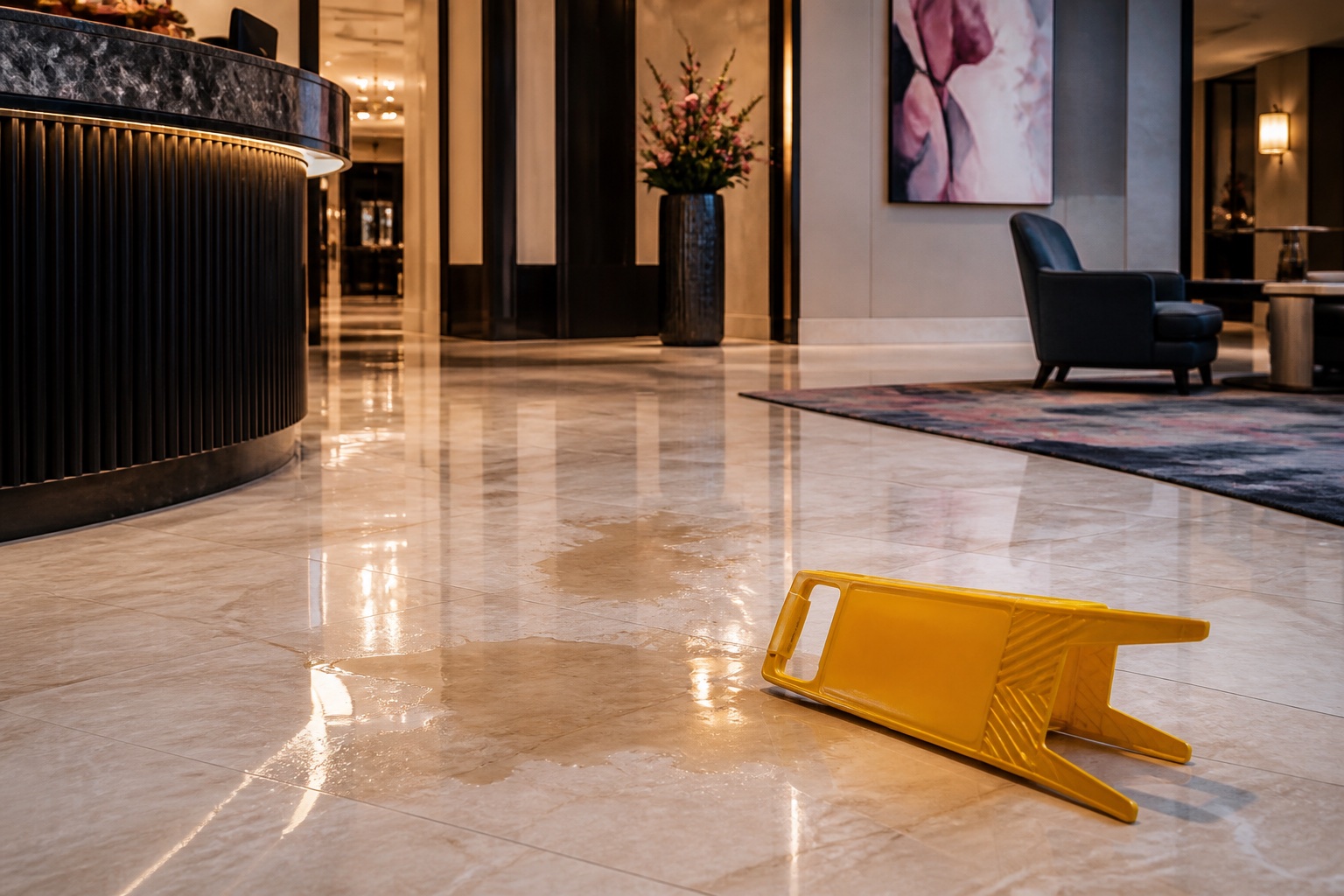
A chipped stair at a pool, a wet lobby, a dark corridor, an escalator, a valet lane: those files live on the condition and on who controlled the place. Las Vegas properties hold the cameras and the logs. Guests hold the next hour. Photograph the area. Report the incident. Keep the name of the person who took it. Ask, in writing, that video be preserved.
Hotel files are explained on Las Vegas hotel injuries and in the guide to hotel injury claims. Casino floors, pits, and gaming-area falls are not the same as a hotel room; start with Las Vegas casino injuries. Ordinary property falls (stores, restaurants, sidewalks that a business controls) sit on slip and fall and when a property injury is not your fault.
Nevada has a notice rule for many injuries at hotels, inns, and similar public accommodations. It is not a slogan that the property always wins or always loses. It is a reason the condition, and what the property knew or should have known about it, are the case. Preserve the scene before it is reset.

Cars, rideshares, and the Strip.
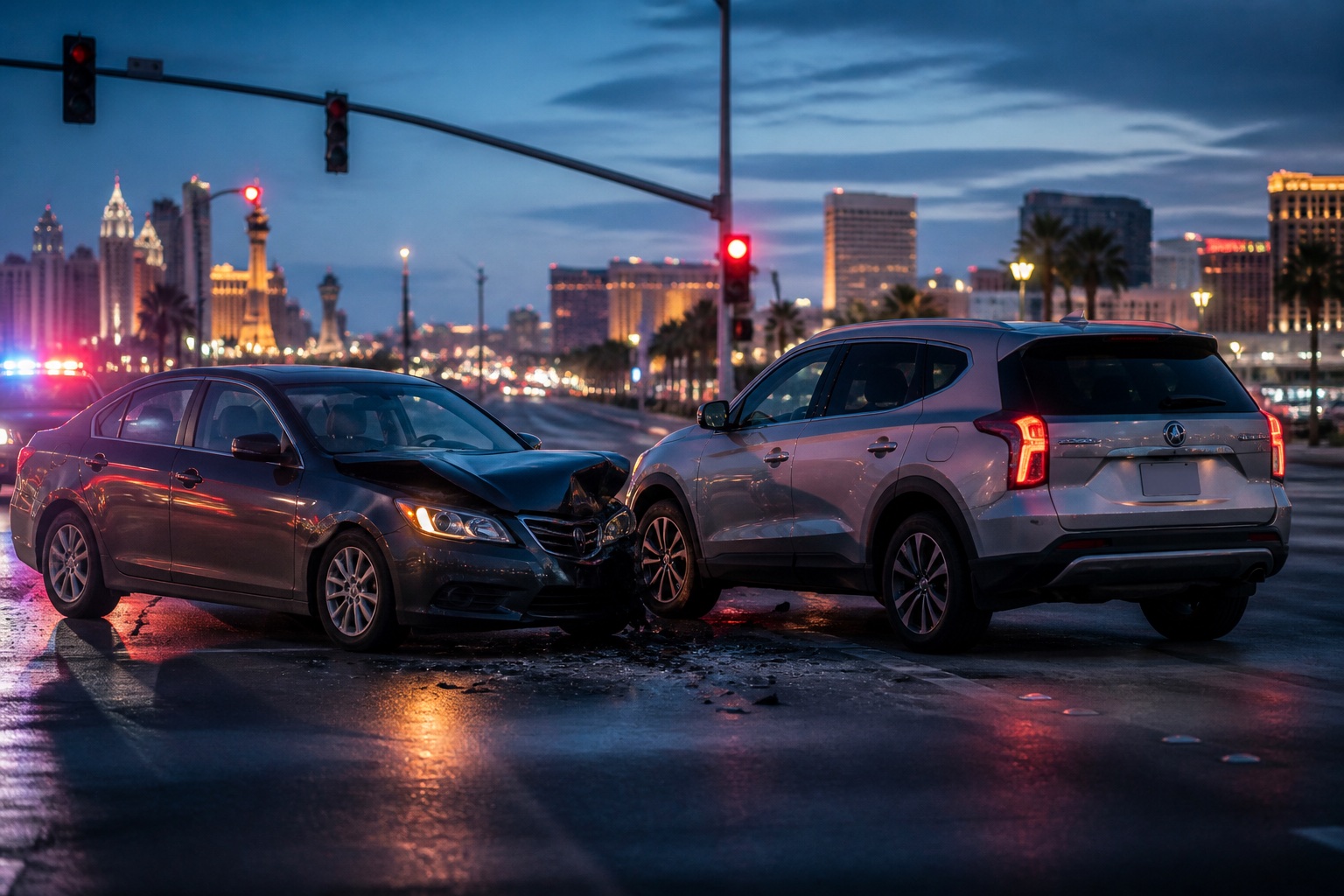
Visitors get hurt in other people’s cars as often as they get hurt in other people’s hotels. A taxi, a rideshare, a rented SUV, a pedestrian in a crosswalk off Las Vegas Boulevard: fault is still a Nevada fact question. See Las Vegas car accidents, what to do after a car crash, and Nevada comparative negligence.
Save the trip receipt before the app archives it. Photograph plates. Get the incident number. If the other driver has no insurance, your own uninsured/underinsured motorist (UM/UIM) coverage may be the file. That is first-party coverage under your own policy, not a claim against the other driver’s insurer. Read uninsured driver in Nevada. Do not give a recorded narrative in the Harry Reid terminal because someone called while you were in line. For why a recorded call can become a problem, see talking to the insurance company after an accident.
Security, assaults, and the garage at night.
Not every visitor injury is a slip. Parking garages, room corridors, and the walk back from a venue raise staffing, lighting, cameras, and prior incidents. Those questions belong on negligent security. If the harm is a sexual assault, start with civil sexual assault and abuse. You do not have to label the legal theory in the lobby. You do have to get safe and get care.
Do not sign a release because a risk manager is holding a voucher and your flight is in three hours. Take the paper. Call counsel. Comparative fault can still be argued in property and crash files; that is Nevada comparative negligence, not a reason to stay silent.
Before you fly home.
- Appropriate medical evaluation, even if you plan to follow up in your home city
- Photographs of the place, your shoes, the lighting, and visible injury
- Reservation, folio, ride receipts, and the names of employees who responded
- A written request that video of the area be preserved
- Nothing signed that you have not had time to read
Follow-up care at home should still mention the Las Vegas event. A later clinician who never hears “hotel pool” or “rideshare on Tropicana” cannot write the record you will need. Summit can talk while you are still in town or after you are home. We will tell you whether the firm may be able to help. Past results do not predict your case.
Bring photographs, the reservation, and anything you were asked to sign. A confidential review is the shortest path from a messy night to a plan.
Free case reviewQuestions people bring to the first call.
These answers are general information. They are meant to help you prepare for a conversation, not to replace advice about your situation.
I don’t live in Nevada. Can I still have a claim here?
Often the injury is governed by Nevada law because it happened here. You do not have to be a resident. Flying home does not end the file, and it does not pause deadlines. Speak with Nevada counsel about your facts.
The hotel offered to pay the urgent-care bill if I sign something tonight.
Take the paper with you. Do not sign a release in the lobby to make a flight. A medical bill is not the full measure of a serious injury, and a same-night signature is rarely in your interest.
I am leaving tomorrow. What should I do tonight?
Get appropriate care. Photograph the place. Report the incident and keep names. Save the reservation, folio, and ride receipts. Ask in writing that video be preserved. Then call Nevada counsel before you sign anything.
Does it matter whether I was hurt in a hotel, a casino, a car, or a garage?
Yes. The place changes the proof: innkeeper notice, casino surveillance, a crash report, or a security file. The practice-area pages for hotel injuries, casino injuries, slip and fall, car accidents, and negligent security are the next read, not a substitute for a conversation.
Keep reading.
Other Summit guides that sit next to this one.