
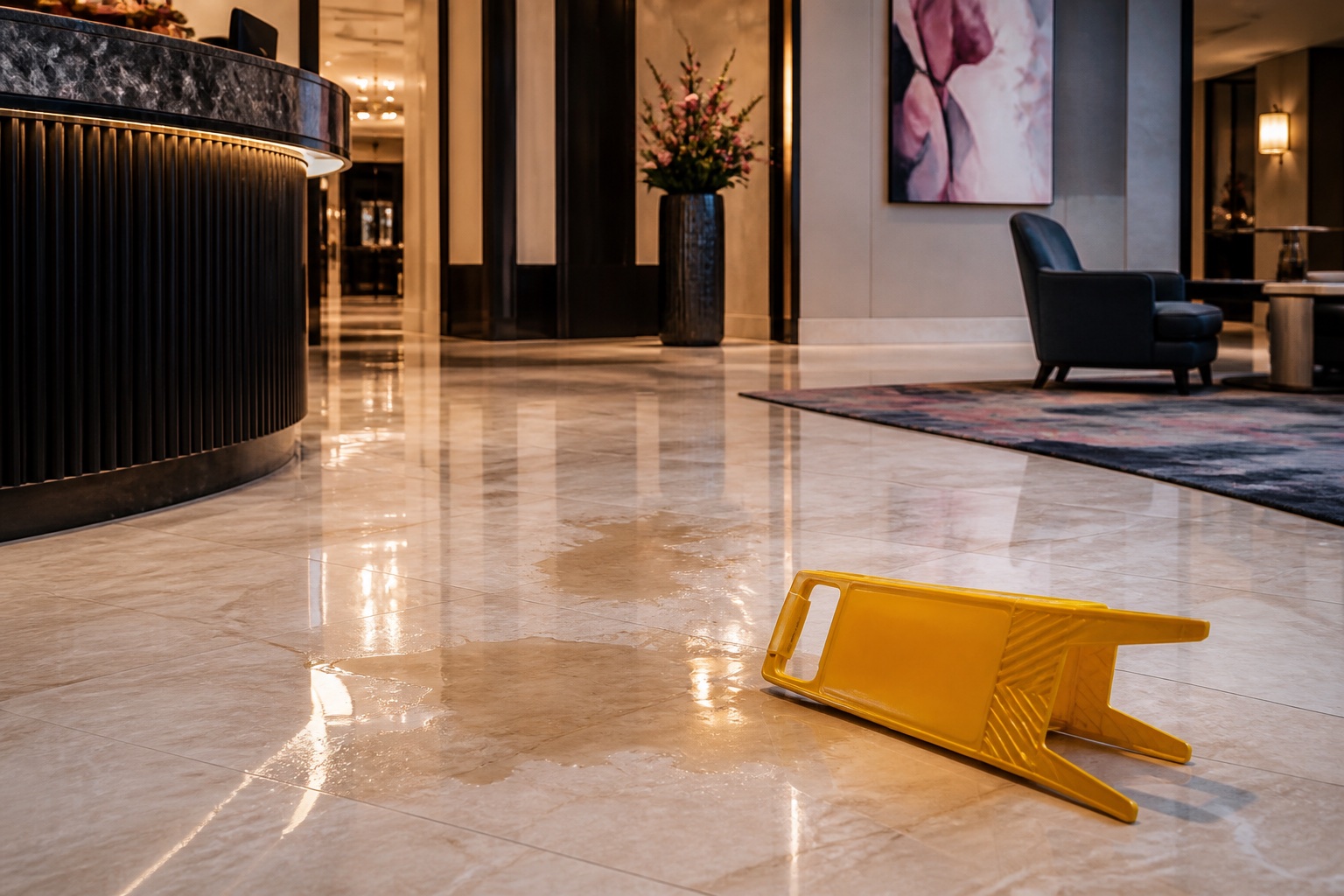
The condition disappears faster than the injury.
A wet tile in a casino promenade gets mopped. A torn runner in a Henderson grocery is replaced. A dark stair in a parking garage looks ordinary once the lights are repaired. You are left with pain, a medical bill, and a story that sounds thin if nobody wrote it down.
Property owners and their insurers will ask whether you were rushing, looking at your phone, wearing the wrong shoes, or ignoring a cone. Some of those questions are fair. Many are a habit. The answer is not a speech. It is a record of the place as it was.
This guide is general information for Nevada, not advice about your facts. Summit reviews slip and fall, hotel, and other premises injuries across Las Vegas, Reno, and the rest of the state.
Record the place, not just the fall.
Photograph the surface, the lighting, any warning, the stairs or elevator, your clothing and shoes, and a wider frame that shows where you were. If a cone or sign was down, photograph that too. If nothing warned you, photograph the empty corridor.
Wide shots and close shots
Close-ups show texture: water, grease, a broken nosing, a lifted threshold. Wide shots show context: how dark the hall was, how far the host stand was, whether the pool deck drained toward the walkway.
What you were wearing is not a confession
Insurers love footwear. Photograph it anyway. A clean, ordinary shoe in a dark, wet hallway is part of the scene, not an admission.

Report it, and keep the name of who took the report.
Ask how the incident is being documented. Get the employee's name, title, and a copy or photograph of anything you sign. Do not write a narrative you do not believe. "I fell near the ice machine on the second floor at about 9:40 p.m." is a report. "I guess I wasn't looking" is a gift.
Save witness names, reservation records, store receipts, and every text that follows. If you are a visitor, keep the flight change, the extra night, and the taxi to an urgent-care clinic. Those details explain the disruption, not just the bruise.
Ask that video and logs be preserved.
Security video, inspection logs, maintenance tickets, and employee schedules are usually in someone else's cabinet. Properties overwrite cameras on a short cycle. A prompt written preservation request can matter more than a later argument about what the video "would have shown."
You can ask the manager, in writing, to keep footage of the area for a window before and after the incident. Then keep a copy of that request. Counsel can follow with a formal letter. Waiting until you "see how you feel next month" is how files go dark.
Fault is not the same as "I was on their property."
Nevada premises cases turn on condition, control, and notice. Was the danger hidden? How long had it been there? Who was supposed to inspect? Hotel and innkeeper claims can also implicate NRS 651.015, which focuses on whether the property had actual or constructive notice of the condition. That statute belongs in a hotel analysis. It is not a slogan for every grocery-store fall.
Nevada also uses modified comparative fault under NRS 41.141. If your share of fault is greater than the defendants' combined share, recovery can be barred. Insurers use that math early. Documentation of the condition is how you keep the math honest.
Hotels, stores, and parking garages are not the same case.
A Strip resort has cameras, contractors, and a risk department. A neighborhood market may have a two-person night crew. A garage may be owned by one entity and staffed by another. The first job is to identify who controlled the square of floor where you went down.
If the injury followed a crime or an assault, the questions shift toward security, lighting, and prior incidents. Those matters live on our negligent security and civil sexual assault and abuse pages. For hospitality-specific steps, use what to know after a Las Vegas hotel injury.
Bring photographs, the report, and what you remember of the condition. We will tell you whether Summit may be able to help.
Free case reviewQuestions people bring to the first call.
These answers are general information. They are meant to help you prepare for a conversation, not to replace advice about your situation.
Is a property automatically responsible because I fell there?
No. Responsibility usually turns on the condition, who controlled the area, what the owner or occupier knew or should have known, and the evidence that remains. Being on someone else's property is the start of the analysis, not the end of it.
The staff cleaned the spill before I could photograph it. Now what?
Write down what you saw, who cleaned it, how long it appeared to have been there, and who took your report. Ask that video and inspection logs be preserved. A missing photograph is a problem. It is not always the end of the file.
Does Nevada reduce a claim if they say I was clumsy?
Nevada follows a modified comparative-fault rule. An injured person can still recover if their share of fault is not greater than the defendants' combined share. Insurers use that rule in negotiation. It is a reason to document the condition, not a reason to assume you have no claim.
What if the injury happened at a hotel or after an assault on the property?
Hotel and casino cases often involve records the property controls. Assault and parking-garage cases may raise security questions. See the hotel guide and, when the harm is an assault, our negligent-security and civil sexual-assault pages.
Keep reading.
Other Summit guides that sit next to this one.