A truck crash is not a larger car crash.
The police report will name a driver and a company. It will not usually contain the hours log, the qualification file, the last brake inspection, or the electronic control module download. Those things live with the carrier, a maintenance contractor, an insurer, or a broker.
Nevada sees commercial traffic through Las Vegas, Reno, Elko, and the corridors that feed California and Utah. High-impact collisions produce catastrophic injuries. They also produce a paper and data trail that is easy to miss if the first week is spent only on the body shop.
This is general information. For representation, see our semi-truck crash page. For ordinary motor-vehicle steps, start with what to do after a car crash.
What the police report will not contain.
Officers work a scene. They are not building a civil discovery plan. The report may be incomplete on speed, fatigue, load shift, or a prior violation history. Treat it as one document in a larger file.
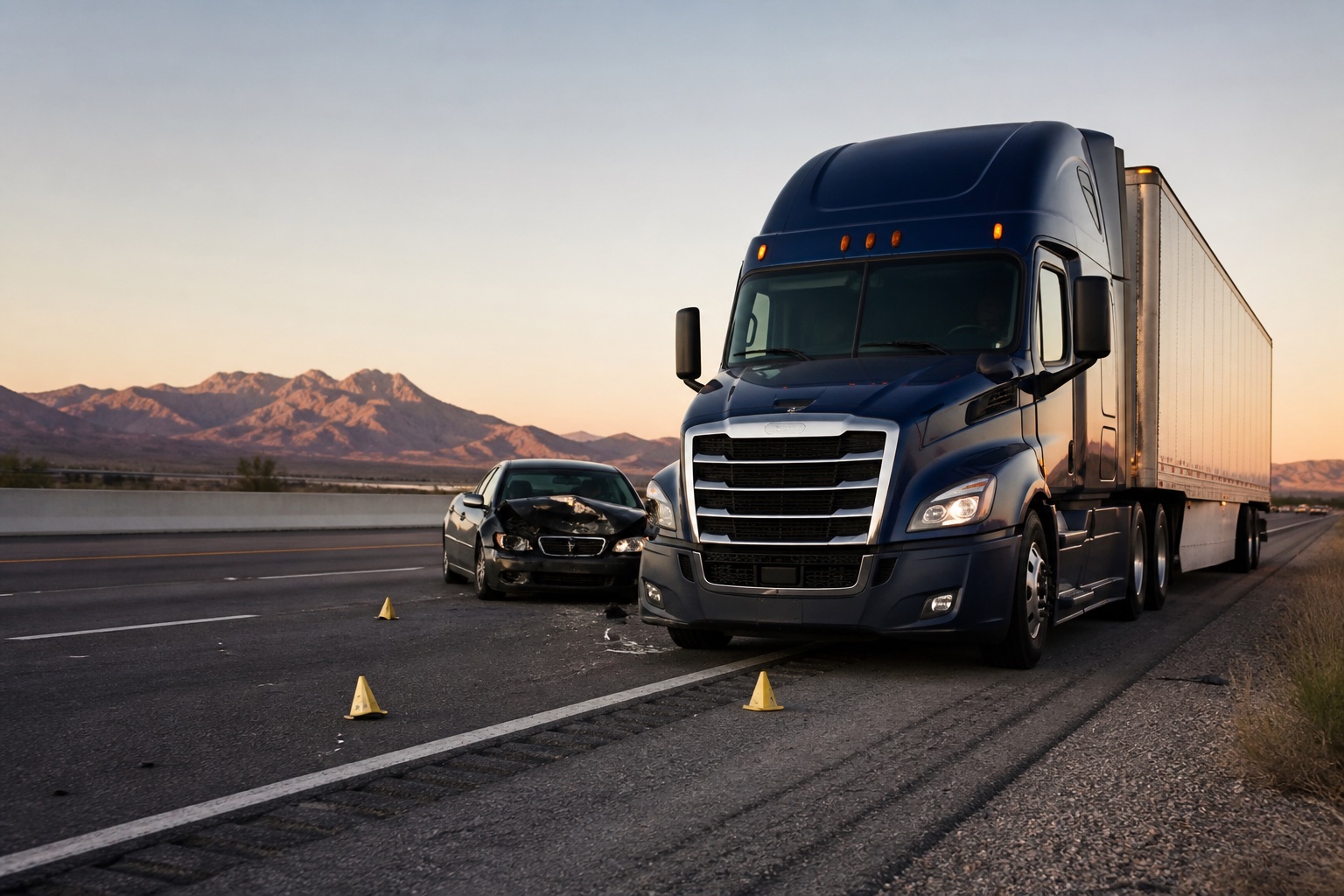
If you can do so safely, photograph the truck's USDOT number, trailer number, placards, and the position of both vehicles. Write down the company name on the door. Those details are how later requests get to the right people.
Hours, qualification, and the company file.
Hours-of-service and ELD data
Federal hours rules exist because fatigue kills people. Electronic logging devices, dispatch notes, and fuel or toll records can show whether a driver should have been on that stretch of I-15 at 3 a.m. The data is not yours. Someone has to ask for it.
Driver qualification and training
Application files, drug and alcohol testing, prior employers, and training records can matter when the collision looks like a skill or screening failure. They can also show that the company did its job. Either finding is useful. Guessing is not.

The truck itself: ECM, cameras, and maintenance.
Modern trucks store speed, braking, and engine events. Outward and inward cameras may capture the minute before impact. Those systems overwrite. Vehicles get repaired. A wrecked tractor on a lot in North Las Vegas will not wait for a convenient month.
Inspection, repair, and brake records can explain a jackknife or a delayed stop. If a component failed in a way that looks like a defect, the file may also belong on our product liability page. Do not throw away a broken part if you control it.
Cargo, brokers, and other parties.
The name on the door is not always the only responsible company. Shippers, brokers, and maintenance contractors can belong in the analysis. Loading and cargo-securement records can matter when a load shift starts the wreck.
Sorting those parties is counsel work. Your job in week one is simpler: survive the medical week, keep your own photographs, and do not give a recorded narrative you have not thought through.
Why preservation letters matter.
A letter that identifies the crash, the truck, and the categories of data to keep is one of the few early acts that reliably changes a commercial file. Waiting until "we see what the insurance does" is how ELD data and camera footage become a story about what used to exist.
If a family is dealing with a death, start with wrongful death and a call. The evidence list does not get shorter because the loss is larger.
Bring the report, photographs, and any company name you captured. Summit can discuss whether the firm may be able to help and what should be preserved now.
Free case reviewQuestions people bring to the first call.
These answers are general information. They are meant to help you prepare for a conversation, not to replace advice about your situation.
Is a police report enough after a semi-truck crash?
It is a starting point. Commercial files often include hours-of-service data, qualification records, maintenance, ECM downloads, and company cameras. Those records are held by other people and are not kept forever.
How quickly can truck data disappear?
Some electronic data and camera footage are overwritten on short cycles. Companies also repair vehicles. A prompt preservation request is one of the few early steps that reliably matters.
What should I save if I am the injured driver or passenger?
Your photographs, medical records, witness names, the truck's DOT number if you saw it, and every communication from insurers or the motor carrier. Do not rely on the company to keep your copy.
What if a family member was killed?
Get medical and scene information into one place and call counsel. Our wrongful-death page explains the posture. This evidence guide still applies. The truck's file does not become less important because the loss is larger.
Keep reading.
Other Summit guides that sit next to this one.