
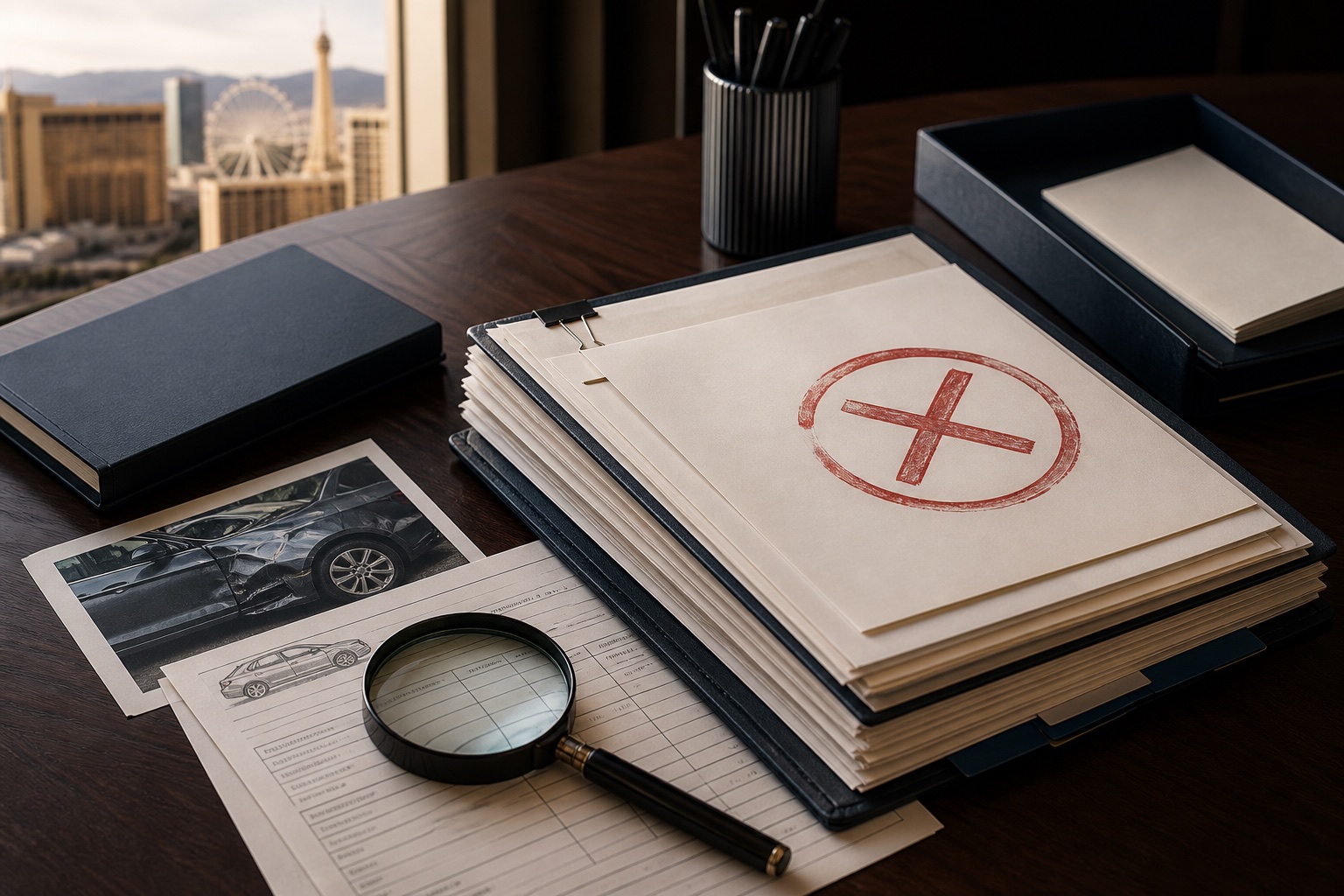
Two different callers, two different jobs.
Talking to the insurance company after an accident sounds like one task. It is not. The other driver’s insurer is looking for a way to pay less, or nothing. Your own insurer may be checking coverage, taking a first-party claim, or preparing a subrogation file. The voice can be warm in both cases. The incentives are not the same.
You should report a crash when your policy requires it. You should exchange names, plates, and policy numbers at the scene when you can. You should not treat a recorded interview as a favor. This page is general information for Nevada crashes, including visitors. It is not advice about your policy. Summit’s Nevada counsel are Renee Finch, NSBN 13118, and Jaclyn Kliewer, NSBN 14898. Call 702.789.4200 or write intake@stattorneys.com.
The first-hour checklist is still what to do after a car crash. This page is about the phone calls that start before the bruising is visible.
What you can share without narrating.
Identifying information is ordinary: your name, a callback number, the location, the other plate if you have it, your carrier and policy number. That is how two companies find each other. It is not a recorded reconstruction of the light cycle on Las Vegas Boulevard.
Do not guess your speed. Do not estimate the other car’s speed. Do not diagnose your neck on the phone. Do not say you are “fine” because you walked away. Do not apologize as manners. Courtesy becomes a quote in a later letter about Nevada comparative negligence.
Recorded statements
Ask whether the call is recorded. Ask who the caller represents. If it is the adverse insurer, you can decline a recorded statement and offer to follow up in writing, or after you have spoken with counsel. If it is your own company, the cooperation clause may require more. That is a reason to know which company you are on with before you start talking.

Your policy’s cooperation clause is not a blank check.
First-party coverage, collision, medical payments, uninsured motorist, often requires prompt notice and cooperation. Cooperation is not the same as sitting for an open-ended recorded statement while you are still in a back-room clinic. You can usually provide facts, documents, and an examination under the policy without volunteering a theory of fault.
If the other driver had no insurance, your UM claim still asks who caused the crash. Start with the same first-hour steps in what to do after a car crash. Notice to your own carrier should not wait because you are angry at the other driver.
When a first-party claim is delayed, starved, or denied in a way that does not match the policy and the record, the question can become one of bad faith insurance. Save letters, emails, and claim numbers. Do not argue on a recorded line.
Papers they send the same week.
Medical authorizations, property-damage releases, and “advance” checks can arrive while you still have a brace on. A release that covers an ER bill can be written to cover the rest of the injury. Take the document home. Do not sign it in a body-shop lobby.
Comparative fault will show up in these papers even when nobody uses the phrase. Nevada’s rule can reduce or bar recovery. Read Nevada comparative negligence before you accept an adjuster’s version of the crash as the official one.
A cleaner way to handle the first week.
- Write down every caller: name, company, claim number, recorded or not
- Share identifying and policy information; pause on narrative questions
- Get appropriate medical care and keep the paperwork
- Photograph vehicles and the scene if it is still possible
- Call counsel before a recorded statement or a release
Deadlines still run while the phone stays busy, see understanding your rights. The office is at 8488 Rozita Lee Ave, Building 3, Suite 100, Las Vegas, NV 89113. If Spanish is easier, say so.
Bring the claim number and anything you were asked to sign. We will tell you whether Summit may be able to help. No one can promise a result from a first call.
Free case reviewQuestions people bring to the first call.
These answers are general information. They are meant to help you prepare for a conversation, not to replace advice about your situation.
Do I have to give a recorded statement to the other driver’s insurer?
You can share identifying and insurance information. You do not have to guess about speed, fault, or how you feel on a recorded line for the adverse carrier. If you are unsure, pause and call counsel.
What if my own insurance company asks for a statement?
Your policy may have a cooperation clause. That is a different conversation from the other driver’s adjuster. Ask which company is calling and why. Counsel can help you keep cooperation from turning into a dictated narrative.
The caller said the claim will go faster if I record today.
Speed for the insurer is not the same as a fair record for you. Adrenaline hides injuries. A same-day “I feel fine” becomes a quote. Get appropriate care first. The file can wait a conversation.
Should I sign a medical authorization the insurer emails me?
Read it. Some authorizations are broader than the crash. You can usually provide records another way. Do not sign a document you do not understand because someone is holding a rental car.
Keep reading.
Other Summit guides that sit next to this one.