
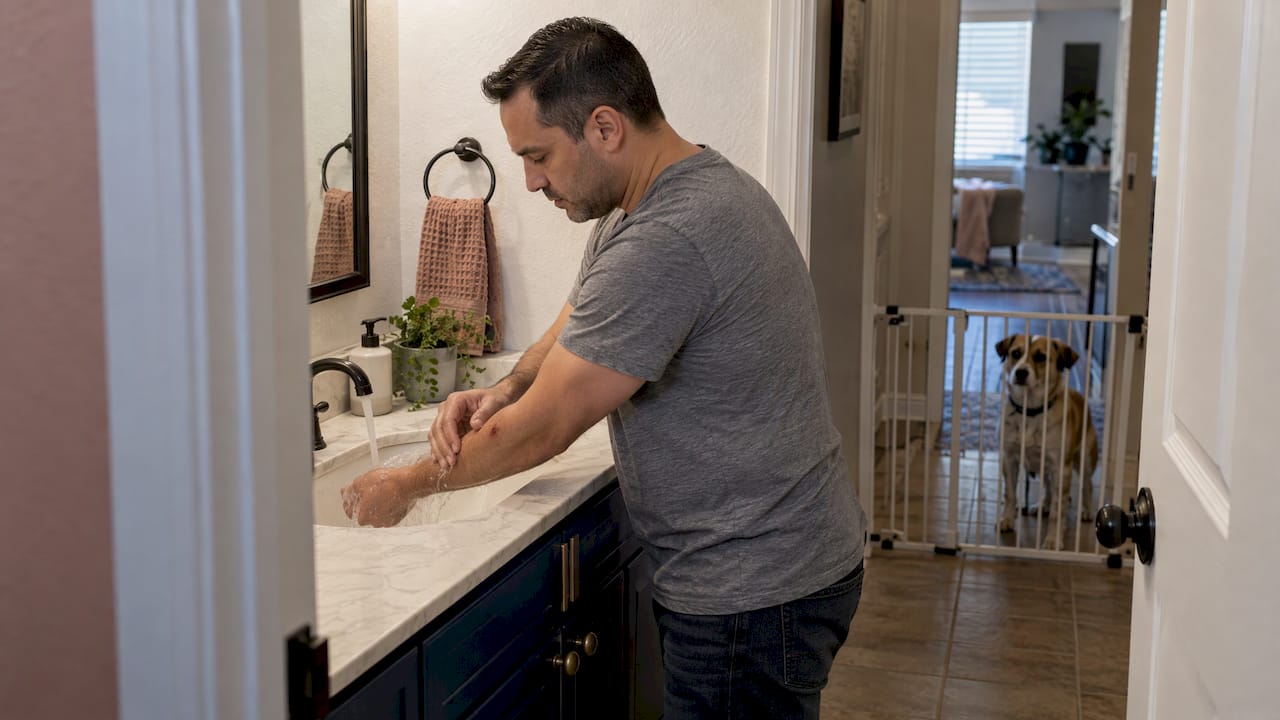
After a bite at a friend’s home, the owner may be someone you know well. After a bite in an apartment courtyard, you may know only the address and the name of the person who was walking the dog. Those are different starting points for a lawyer investigating what happened. A first conversation can start with the information you already have.
Medical care and local bite reports
A clinician can assess a bite wound, infection risk and whether tetanus or rabies precautions are appropriate. For a bite that breaks the skin, MedlinePlus recommends prompt medical attention. Its animal-bite guidance describes when urgent care is needed. For a life-threatening emergency, call 911.
In the Las Vegas Valley, a “Las Vegas” mailing address does not always identify the agency that serves the incident location. Clark County Animal Protection Services’ reporting page lists contacts for unincorporated Clark County, Las Vegas, Henderson and North Las Vegas. The street address or nearest intersection can help identify the right office. An incident number makes it easier to find an existing report. Medical care takes priority over making a report.
What an attorney can investigate
An attorney can compare the accounts of the person who was bitten, the handler and witnesses. A useful distinction is what someone saw firsthand and what they heard afterward. A neighbor who saw a gate swing open, for example, may be able to describe the latch and the sequence of events even if they never saw the bite itself.
- Where it happened. A doorway, shared walkway, parking lot or private yard raises different questions about who could access the area and who looked after it.
- Who was present. The dog’s owner, the person holding the leash and the person responsible for the property may be different people. Their roles are facts to investigate.
- What records exist. Original photographs, a camera location, an animal-services report number or earlier written communications about the same dog may help reconstruct events. A report may contain disputed accounts.
How insurance enters the conversation
The Nevada Division of Insurance explains that homeowners policies can include personal liability and medical payments coverage. The policy in force, who qualifies as an insured, the incident circumstances and any exclusions affect what coverage may be available. Knowing the insurer’s name is a starting point. It does not establish who was responsible or whether a bill will be paid.
For someone meeting with counsel, the useful documents may be as simple as a claim number and a letter from an adjuster. If a letter refers to an exclusion or asks for a release, the attorney can explain what the wording means in the context of that particular claim.
Explaining the effect of an injury
Care records and bills can show what treatment someone received and what it cost. They may say little about missed shifts, difficulty gripping a steering wheel or a child’s change in routine. A dated calendar entry or a person who observed the change can help explain those details. Prior symptoms, periods of improvement and other possible causes are part of that account, too.
Questions for a first case review
- Who would handle the investigation, and who would answer questions as it progresses?
- Which records could clarify an unresolved question about the dog, the property or insurance?
- Which dates or circumstances matter for assessing any deadlines?
- If representation is offered, how would the written agreement address fees, expenses and the possibility of no recovery?
Summit offers a free case review for Nevada injury matters. Its dog bite practice page explains what the firm reviews. A case evaluation depends on the facts and records available.

Talk with Summit
If you have questions about an injury in Nevada, our team can discuss your situation.
Request a case reviewGeneral information only; this article is not legal advice and does not create an attorney-client relationship. Past results do not guarantee future outcomes.