You can sue over food poisoning, but the hard part is proof, not the right to file. A food poisoning lawyer’s job is to connect your illness to a specific meal, product or business, and then to hold the responsible party and its insurer to account for your losses. If you were sickened in Las Vegas, Henderson, North Las Vegas, Reno or anywhere else in Nevada, Summit Trial Attorneys offers a free case review to look at what happened and what evidence exists. We never promise a result, because every case turns on its own facts.
Key Takeaways
- A food poisoning claim is usually a product liability or negligence claim. It can reach the restaurant, grocer, distributor or manufacturer, depending on where the contamination happened.
- The central challenge is causation: showing that a particular food, not another meal or a stomach bug, made you sick.
- What you keep in the first days (receipts, packaging, lot numbers, medical and lab records) often decides how strong the claim can be.
- Compensation in foodborne illness cases can include medical costs, pain and suffering, emotional distress and, in a death, losses to the family.
- Filing deadlines are short and set by state law. Do not wait for your symptoms to fully clear before getting advice.
Table of Contents
- What a food poisoning claim actually is
- Who can be held responsible
- Why proof is the hard part
- What compensation can cover
- Deadlines you should not miss
- How a food poisoning case is built
- Do you need a lawyer for a food poisoning claim?
- Promo: talk to Summit Trial Attorneys
- Perspective: why insurer experience matters in contamination cases
- Frequently asked questions
- Sources
What a food poisoning claim actually is
There is no separate “food poisoning law.” Claims fit into existing legal theories. Product liability is a matter of state law, and the main causes of action are negligence, strict liability and breach of warranty. Strict liability means you do not have to prove the company was careless, only that the product was defective and caused harm.
The Public Health Law Center explains that a product liability claim generally requires three things:
- The product was in a defective condition that made it unreasonably dangerous for its intended use.
- The defect existed when the product left its source.
- The defect was the proximate cause of the injury, meaning the harm followed directly from it.
For food, a defect is usually contamination: salmonella in chicken, E. coli in ground beef, norovirus spread by a sick food handler, listeria in deli products. Most courts recognize three strict-liability theories: manufacturing defects, design defects and failure to warn. Contaminated food typically falls into the first.
The same source notes that claims can generally be brought against anyone in the chain of commerce, including a manufacturer, distributor, seller or retailer. That matters in practice. A diner may only ever deal with the restaurant, but the real source could be a supplier three steps back.
Who can be held responsible
The answer depends on where the contamination entered the food.
- Restaurants, buffets, hotels and casinos. Poor handling, improper temperatures, cross-contamination or an ill employee working while sick. In Las Vegas, where millions of visitors eat at resort kitchens, buffets and event caterers, these settings are central. If your illness followed a hotel or casino meal, see how we approach hotel and casino injuries.
- Grocery stores and retailers. Selling spoiled, recalled or improperly stored products.
- Manufacturers and processors. Contamination at the plant, in packaging or through an ingredient supplier. These cases are product liability claims in the classic sense, and our product liability practice is built for them.
- Delivery and catering businesses. Food held too long or kept at the wrong temperature on the way to you.
Often more than one party is involved, and each will point at the others. Sorting out that chain is part of the legal work.
Why proof is the hard part
Most people who get sick from food never learn exactly which meal did it. The Public Health Law Center points out that proving a single case is difficult: pathogens can take days or weeks to incubate, many people never see a doctor, doctors may not order the right lab tests, and a verifiable multi-person outbreak is unlikely unless your illness links to a wider one. It adds that linking illness to food is far harder for E. coli or salmonella than for something like a foreign object in a sandwich, because of those long incubation periods.
That is why timing and documentation matter more here than in many injury claims. When an outbreak is traced, the evidence can be strong. In a 2024 Montana E. coli case, a filed complaint described clinical and food sample testing that tied wagyu beef from a single lot number to 14 illnesses across five restaurants, along with one death. Lot numbers, lab confirmation and a pattern of cases are what turn a suspicion into a claim.

What to preserve after you get sick
The goal is to keep anything that ties your illness to a specific source and to a specific time.
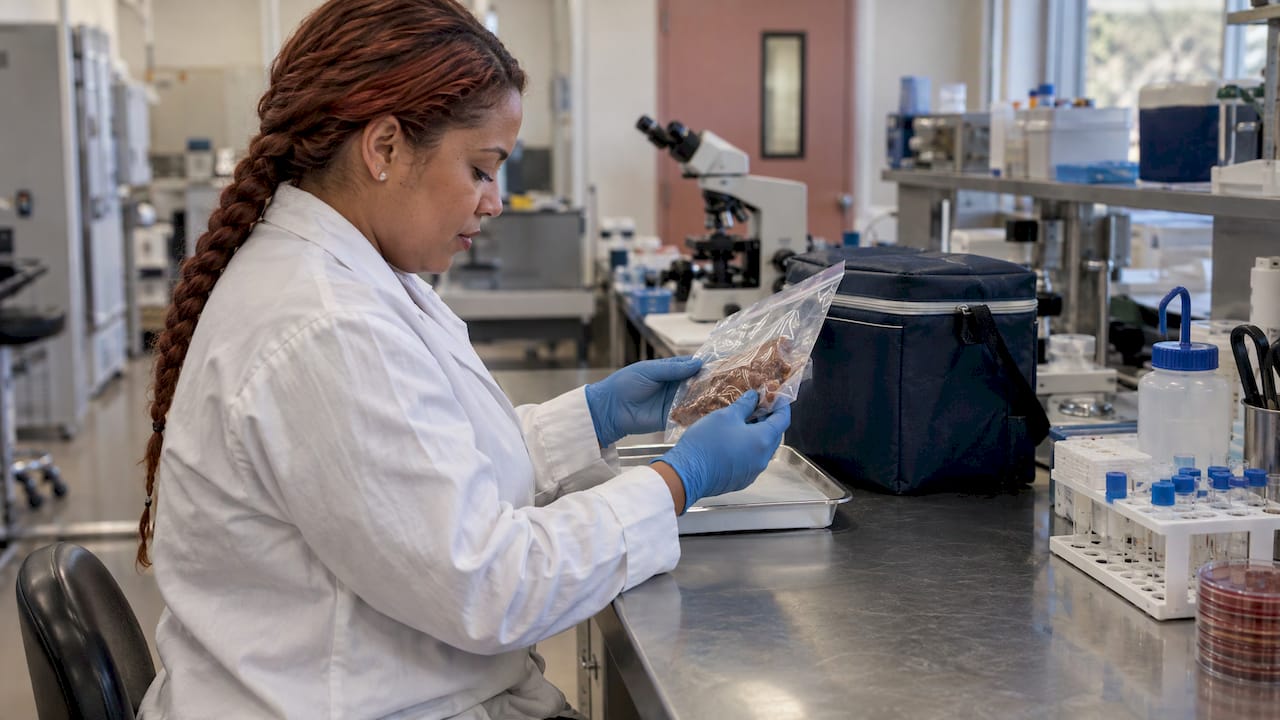
- Get medical care and ask about testing. A stool sample or other lab test that identifies the organism is the strongest single piece of evidence. Tell the provider what you ate and when.
- Keep the food and packaging. If any is left, seal it, label it and freeze it. Keep the wrapper, box or container, including any lot number or best-by date.
- Save proof of purchase. Receipts, card statements, delivery app orders and reservation confirmations show where and when you ate.
- Write down the timeline. List everything you ate for several days before symptoms began, who ate with you, and who else got sick. Note the date and hour symptoms started.
- Report it. If a restaurant or food business may be the source, you can report to the local health authority, which in the Las Vegas area is the Southern Nevada Health District. Reports can help investigators see patterns across several complaints.
- Photograph everything. Take photos of the food, the premises if relevant, and your symptoms or medical visits.
- Keep a record of losses. Medical bills, missed work, travel, and how the illness affected daily life.
Our practice includes guidance on evidence preservation, so you do not have to guess which items matter. Bring what you have to the first conversation, even if it feels incomplete.
What compensation can cover
The losses in a food poisoning case depend on how serious the illness was. The USDA Economic Research Service identifies general losses in foodborne illness cases as including pain and suffering, loss of consortium (a spouse’s help and affection), disability, and psychological and emotional distress. Alongside those, a claim typically includes:
- Emergency, hospital and follow-up medical costs
- Lost wages and lost earning ability
- Long-term complications, which can follow some infections
- Funeral and related losses when a family loses someone
In Nevada, our guides on personal injury damages and emotional distress damages explain how these categories work. If the case involved especially reckless conduct, the difference between punitive and compensatory damages is worth understanding.
States also differ on limits. For example, Colorado raised its cap on noneconomic damages in general liability claims to $1.5 million for actions filed on or after January 1, 2025. Where you were sickened and where you file shape what rules apply, so confirm the rules that govern your own case.
When food poisoning leads to a death
Foodborne illness can be fatal, especially for infants, older adults, pregnant women and people with weakened immune systems. When a family loses someone, the law allows certain relatives or the estate to bring a claim. Our guide to wrongful death lawsuits covers who can file, deadlines and damages, and our Las Vegas wrongful death team can talk with your family about next steps.
Deadlines you should not miss
Every state sets a statute of limitations, the window in which a lawsuit must be filed. The range across the country runs from one to six years for product liability claims, and most states have adopted the discovery rule, which can start the clock when you learn, or should have learned, the illness was caused by the food. Claims against a government-run venue can carry shorter notice steps.
For injuries in Nevada, read our overview of the Nevada personal injury statute of limitations and the difference between limitations and repose deadlines. Evidence fades much faster than deadlines: leftover food gets thrown out, kitchen logs are overwritten and witnesses forget. Starting early protects your options.
How a food poisoning case is built
A strong case is assembled in layers.

1. Establish the illness. Medical records and lab results identify the organism and the date of onset.
2. Link it to a source. Your timeline, receipts, packaging and any matching cases point to a meal or product. Genetic matching of lab samples and health department findings, when they exist, can be powerful.
3. Identify who is responsible. That could be the business that served the food, a supplier, or a manufacturer. Each has different insurance and different defenses.
4. Show what the failure was. A defective product, a food safety violation, a sick employee, improper storage.
5. Prove your losses. Bills, work records, and the way the illness changed your life.
6. Negotiate or try the case. Most injury claims resolve by settlement, but what a company offers depends on how prepared your side is to go to trial.
Dealing with the insurer
Businesses sued over contaminated food are almost always backed by liability insurance, and the insurer, not the owner, often runs the response. Adjusters may call quickly, ask for a recorded statement, suggest your illness came from another meal, or offer a small payment early. Giving a recorded statement or signing a release before you understand the full extent of your illness can limit what you recover. Direct such calls to your attorney. If an insurer refuses to deal fairly with a valid claim, that can itself be a separate matter; we handle insurance bad faith cases as well.
Do you need a lawyer for a food poisoning claim?
If you had a mild illness, recovered in a couple of days and have no medical bills, there may be little to claim. A lawyer becomes worth contacting when:
- You were hospitalized, needed IV fluids or developed complications
- You missed significant work
- A child, older adult or pregnant person was affected
- Several people who ate the same food got sick
- Someone died
- The business or its insurer disputes what happened
The case is also more than a medical question. It involves lab science, health department records, supply chains and insurance strategy, which is where trial experience counts.
Promo: talk to Summit Trial Attorneys
Summit Trial Attorneys represents injured people and grieving families across Nevada, including Las Vegas, North Las Vegas, Henderson, Reno and Carson City, in Clark County, Washoe County and beyond. Our product liability, hotel injury, casino injury and wrongful death work covers the places food poisoning cases tend to start. We work on a contingency basis, which means our fees come from a settlement or judgment, and your first conversation with us is a free case review.

If you are ready to talk, request your free case review and bring your receipts, packaging, medical records and timeline.
Perspective: why insurer experience matters in contamination cases
Food poisoning cases are rarely lost because the person was not sick. They are lost because the link between the meal and the illness was never nailed down, or because the insurer found a gap early and kept pressing on it.
Our approach comes from understanding how insurance defense works. Our team’s background on the defense side of insurance disputes shapes how we prepare: we look at a claim the way the other side will, and we build the evidence to answer those arguments before they are made. That means taking the timeline, the lot numbers and the medical records seriously from the first conversation.
We pair that with focused trial preparation and direct communication. You should know where your case stands, what we need from you and what comes next, without having to chase anyone for an answer. Our work includes product defect litigation, including a $41 million product defect case, and we bring that same preparation to every client. Past results do not guarantee any outcome in a new case, and we never promise one.
If you are sick, or your family is grieving, we would rather you call early. Preserve what you can, get care, and let us look at the facts.
Travis
Frequently asked questions
Is it easy to sue for food poisoning?
Filing is straightforward, but winning depends on evidence. You generally need to show the food was contaminated, that it came from the defendant, and that it caused your illness. Lab-confirmed diagnoses, preserved packaging and a clear timeline make the difference.
How much does a food poisoning lawyer cost?
Many injury firms, including ours, work on contingency, meaning fees are paid from a settlement or court award rather than up front. Fee terms vary by firm and should be explained in writing before you sign. Ask any firm what percentage applies and how case costs are handled.
Can I sue a restaurant if I did not see a doctor?
It is harder, because medical records and lab results are the main proof of both the illness and its cause. If you are still sick or symptoms return, get examined and tell the provider what you ate. Then contact us so we can review what evidence remains.
Does the claim differ for a foreign object versus a bacterial illness?
Yes. A foreign object such as glass or metal is easier to link to a specific meal. Bacterial and viral illnesses have incubation periods that make the source harder to establish, so a precise timeline and testing become more important.
Sources
- Foodborne Illness & Injury, Public Health Law Center
- Product Liability & Safety 2025, USA
- Plaintiffs’ First Amended Complaint, Flathead County E. coli outbreak, 2024
- Product Liability and Microbial Foodborne Illness: Appendix, USDA Economic Research Service
- 2024 Civil Justice Update: Key Litigation Trends
Recommended
This article was written with the assistance of AI and should never be treated as legal advice. It is not 100% guaranteed to be correct and you should never fail to contact an attorney based on its contents.
Talk with Summit
If you have questions about an injury in Nevada, our team can discuss your situation.
Request a case reviewGeneral information only; this article is not legal advice and does not create an attorney-client relationship. Past results do not guarantee future outcomes.