
A product liability lawyer represents people hurt by a defective or dangerous product, and the families of those who died. The lawyer investigates what went wrong, identifies everyone in the product’s chain of sale, and pursues compensation through settlement or trial. If a product injured you or someone you love in Las Vegas, Henderson, Reno or anywhere else in Nevada, the most useful first steps are to keep the product, document the injury and talk to a lawyer before anyone alters the evidence.
This guide explains what a claim involves in plain terms: the kinds of defects, who can be held responsible, what you have to prove, what compensation can include, and how a lawyer builds the case.
Key Takeaways
- A product claim rests on proving a defect (in manufacturing, design, or warnings) and that the defect caused your injury.
- Everyone along the chain of distribution, from designer to retailer, can potentially be named in the lawsuit.
- The product itself is usually the most important evidence. Do not repair, discard or test it yourself.
- Filing deadlines differ by state and can end a case if missed, so speak to a lawyer early.
- No lawyer can guarantee a result. A good one explains your options honestly and prepares the case as if it will be tried.
Table of Contents
- What product liability means
- The three types of product defects
- Who can be held responsible
- What you have to prove
- Evidence to protect after an injury
- Compensation in a product liability case
- Deadlines: why timing matters
- How a product liability lawsuit unfolds
- How to choose a product liability lawyer
- Our perspective
- Talk to a Nevada product liability team
- FAQ
- Sources
What product liability means
Product liability is the area of law that holds the businesses behind a product responsible when it injures someone. In the United States, claims generally travel along three routes: strict liability, negligence and warranty theories, and each is governed by state law, so the details vary from state to state.
Strict liability is the route most injured people hear about. It focuses on the condition of the product, not on whether the company was careless. Negligence asks whether the company failed to use reasonable care. Warranty claims look at promises, written or implied, about how the product would perform.
If you want to understand how carelessness is measured in Nevada, our article on gross negligence versus negligence walks through the difference.
The three types of product defects
The American Law Institute’s Restatement (Third) of Torts: Products Liability describes three categories of defect: manufacturing defects, design defects, and inadequate instructions or warnings. Most claims fit one of these.
Manufacturing defects
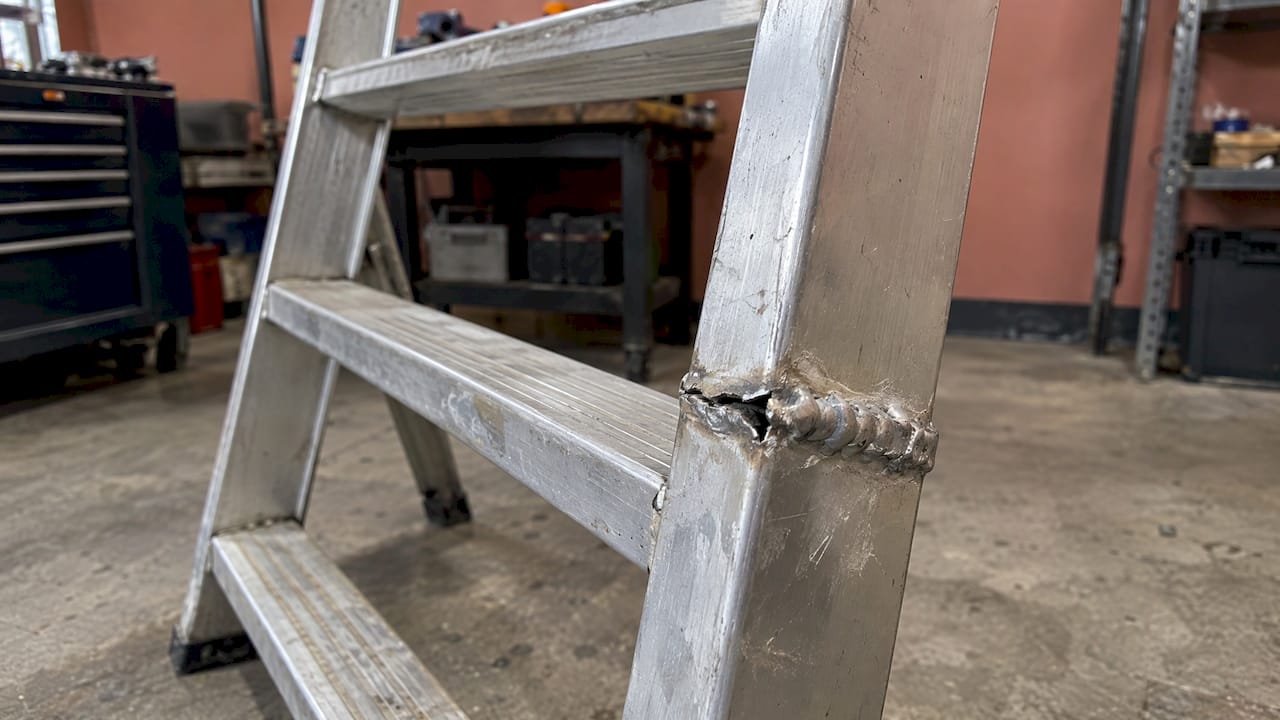
The product was made wrongly. Something went wrong on the line, so this particular item differs from the others in its range. A brake line installed with a flaw, a battery with a contaminated cell, or a ladder with a bad weld would be examples. Because the problem is in the one item you owned, that item matters enormously as evidence.
Design defects
Every unit is built as intended, but the design itself is unreasonably dangerous. Think of a space heater that tips over easily and has no shut-off, or a vehicle with a roof that is prone to collapse in a rollover. Design cases usually depend heavily on engineering analysis and on whether a safer alternative design was practical.
Warning and instruction defects
The product may work as designed, yet the maker failed to warn about a known risk or to give adequate instructions. Missing warnings about fire risk, chemical hazards or dangerous combinations are typical examples.
Everyday products where claims arise
Product claims are not limited to cars. Cases can involve power tools, children’s products, household appliances, lithium batteries, tires, medical devices, and recreational equipment. In Nevada we see how much of daily life runs on products: e-bikes and scooters used on Las Vegas streets, and ATVs and UTVs ridden in the desert outside Clark County. When one of these fails because of how it was designed or built, a product claim can sit alongside a crash or accident claim.
If the problem is a vehicle with a known safety defect, vehicle recall legal claims are one more angle worth understanding when you look at what owners can recover.
Who can be held responsible
The general approach is to look at everyone in the product’s path to the consumer. Nolo explains that the usual rule is to sue everyone in the chain of distribution: the designer, manufacturer, wholesaler or distributor, and retailer, then let the court sort out responsibility. Cornell’s Legal Information Institute adds that component part makers can also be included, as can an assembling manufacturer.
This matters in practice because the company that made the product may be overseas, may have dissolved, or may be hard to serve. A lawyer who maps the whole chain gives you more than one path to recovery.
Products are also used on other people’s property. A defective escalator, a faulty hotel room fixture or an unsafe casino floor may involve both a product claim and a property owner’s responsibility. Our guide to premises liability claims in Nevada explains how that second side works.
What you have to prove
Elements differ somewhat depending on the source and the state, but they cluster around the same ideas. Under strict liability, you generally must show that the defendant made or sold the product, that it was defective when it left the defendant’s hands, and that the defect caused your injuries.
Nolo frames it as four elements: you were injured, the product was defective or lacked proper warnings, the defect was the specific cause of the injury, and you were using the product in the manner intended.
In plain terms, a lawyer will want to answer these questions:
- What exactly was the product, and who sold it?
- What was wrong with it, and was it wrong when it was sold?
- How was it being used when you were hurt?
- How do we connect that flaw to your specific injuries?
That last question is often the hardest. Expert testimony typically carries the case, and federal courts apply Rule 702 of the Federal Rules of Evidence, which allows expert opinion only when the expert is qualified and the opinion rests on sufficient facts and reliable methods. A case built on a weak expert can fail even when the product plainly hurt someone, which is why who the lawyer works with matters.
Evidence to protect after an injury
In a product case, the product is the case. Professionals who defend and bring these claims put it bluntly: the proof is in the product, and a plaintiff’s failure to preserve it for inspection can even lead to a case being thrown out before trial. The same source explains that the duty to preserve arises once litigation is pending or reasonably foreseeable, and that the plaintiff has a clear duty to keep the product involved.
Here is what to do, in order of urgency:
- Get medical care first. Your health comes before the paperwork. Records from that first visit also tie the injury to the date.
- Stop using the product and keep it as it is. Do not repair it, clean it, throw it away, or send it back to the manufacturer. Store it somewhere safe, with all its parts.
- Keep packaging, manuals and receipts. They show who sold it, when, and what warnings came with it.
- Photograph everything. Capture the product, the scene, your injuries and any damage to property, with dates if you can.
- Save the digital trail. Order confirmations, product listings, emails with the seller and any recall notices matter.
- Write down what happened while it is fresh, including who saw it.
- Do not give a recorded statement to an insurer or sign a release before speaking with a lawyer.
If the product is lost in the incident itself, for instance after a fire, tell your lawyer immediately. Evidence preservation guidance is part of what we provide from the first conversation.
Compensation in a product liability case
What a claim can include depends on your state’s law and the facts. As a general U.S. overview, economic damages include property damage, past and future medical costs, lost earnings and lost earning capacity. Non-economic damages include pain and suffering, loss of quality of life, emotional harm and loss of consortium. Punitive damages may be available where a defendant’s conduct was reckless, malicious or otherwise reprehensible.
When a defective product kills someone, families can seek funeral and burial costs, and compensation for grief and the loss of companionship. Our article on a wrongful death lawsuit explains who can file, the deadlines and the damages, and our wrongful death team handles those cases directly.
Outcomes vary enormously. In one federal case in Georgia, a court awarded $25,000,000 for the full value of a decedent’s life under that state’s law, on top of other damages. That is an example of how one state’s rules can shape a result, not a prediction for any other case. Every claim depends on its own facts, and no lawyer can promise an outcome.
One limit to know about: for most kinds of product-caused injury, states do not provide any compensation fund, and federal programs exist only for certain products and exposures such as vaccines and radiation. In most cases, a lawsuit or insurance claim is the path to compensation.

Deadlines: why timing matters
Every state sets a time limit, called a statute of limitations, and some also set an outer limit called a statute of repose. FindLaw reports that deadlines for these claims are usually between two and four years, running from the date of injury or from when it was discovered.
The spread between states is wide. A state-by-state table lists, for example, California at two years, New York at three, and Florida at four with a 12-year repose period, while Tennessee and Kentucky allow only one. Missing the date can end a case completely.
For a Nevada injury, do not try to work out your own deadline from a general chart. The date can depend on the type of claim, the injured person’s circumstances and when the problem was or should have been discovered. A manufacturer may also argue you should have found the injury sooner, a point that can call for expert help to rebut. Ask a Nevada lawyer to confirm your exact deadline at the start.

How a product liability lawsuit unfolds
The path generally looks like this:
- Investigation. The lawyer reviews medical records, secures the product, and consults engineers and medical professionals to pin down the failure and the injury.
- Pleadings. A complaint is filed naming the responsible parties, and the defendants respond.
- Discovery. Both sides exchange documents and take testimony. In product cases this often includes design files, testing records, complaint histories and prior incidents.
- Pre-trial motions and expert challenges. Defendants frequently ask the court to exclude expert opinions or to dismiss claims.
- Settlement talks. Settlement can happen at any stage, and the best settlements tend to come when the other side believes the case is ready for trial.
- Trial and appeals. If the case does not resolve, a judge or jury decides it, and either side may appeal.
How long all this takes depends on the number of parties, the complexity of the defect, the volume of records, expert disputes and the court calendar. Simple cases can resolve in months. Complex ones can take years. Your lawyer should tell you honestly where yours is likely to fall.
How to choose a product liability lawyer
These cases are expensive and technical, and manufacturers defend them with large legal teams and their own experts. Look for the following:
- Trial focus. Companies pay more attention when they know the other side will actually try the case.
- Insurance knowledge. Many product cases end up being fought with insurers. A lawyer who understands how insurance defense works can anticipate their moves.
- Direct communication. You should be able to reach the lawyer handling your case, and get plain answers about strategy.
- A contingency fee arrangement. Fees come out of a settlement or judgment, so you are not paying hourly while recovering.
- Resources for experts. Ask how the firm works with engineers and medical experts, because they are central to proof.
- Experience with your kind of product or setting. A defective scooter battery, a hotel fixture and a car part each raise different issues.
Our perspective
We came to this work with a view of the insurance industry’s defense playbook, and that shapes how we handle product cases. Manufacturers and their insurers tend to answer the same way: blame the user, question the cause, and wait for the injured person to run out of patience.
Our approach is to prepare every case as if it is going to a jury. We secure the product early, bring in the right experts, and keep you informed in plain language so you are never guessing where your case stands.
We cannot promise any result, and we will not. What we can promise is focused trial preparation, direct communication and personal attention from a team that has handled serious injury and wrongful death cases across Nevada, including a $41 million product defect case.
Travis
Talk to a Nevada product liability team
If a defective product hurt you or killed a family member, we can review what happened, explain your options and tell you what to preserve. Our product liability practice represents individuals and families in Las Vegas, North Las Vegas, Henderson, Reno, Carson City and across Clark County, Washoe County and the rest of Nevada. We work on a contingency basis, so our fees come from a settlement or judgment.

Start with a free case review. Tell us what happened, and we will tell you what we see.
FAQ
Do I need a lawyer for a product liability claim?
You are not required to have one, but these claims are technical. Proving a defect and linking it to your injury usually requires experts, and the companies involved have legal teams and insurers. A lawyer can secure the evidence and handle the other side for you.
Can I sue if I was not the one who bought the product?
Often yes. Liability is generally aimed at the businesses that made and sold the product, and the injured person does not have to be the buyer. You will still need to show the defect caused your injury and that you were using the product as intended.
What if the product is gone or was destroyed?
Tell your lawyer right away. Losing the product can make the case harder, and courts take preservation seriously. Photos, receipts, packaging, medical records and records of similar incidents can still help show what happened.
How much does a product liability lawyer cost?
At Summit Trial Attorneys, we handle personal injury and related cases on a contingency basis, which means our fee comes from a settlement or judgment. We do not publish a fee percentage, so ask us about the terms during your free case review.
Sources
- Product Liability Laws and Regulations 2026, USA (ICLG)
- Torts: Products Liability (American Law Institute)
- Defective Products: Who to Sue, What to Sue for, and Damages (Nolo)
- Product Liability FAQ (Nolo)
- Products liability (Cornell Legal Information Institute)
- Witness Testimony Under Rule 702 (IADC)
- 2022 Product Liability & Complex Torts Seminar (Alfa International)
- Andrews v. Autoliv Japan Ltd. (FindLaw case law)
- Time Limits for Filing Product Liability Cases (FindLaw)
- Statute of Limitations by State 2026 (Settlement Insight)
Recommended
This article was written with the assistance of AI and should never be treated as legal advice. It is not 100% guaranteed to be correct and you should never fail to contact an attorney based on its contents.
Talk with Summit
If you have questions about an injury in Nevada, our team can discuss your situation.
Request a case reviewGeneral information only; this article is not legal advice and does not create an attorney-client relationship. Past results do not guarantee future outcomes.