
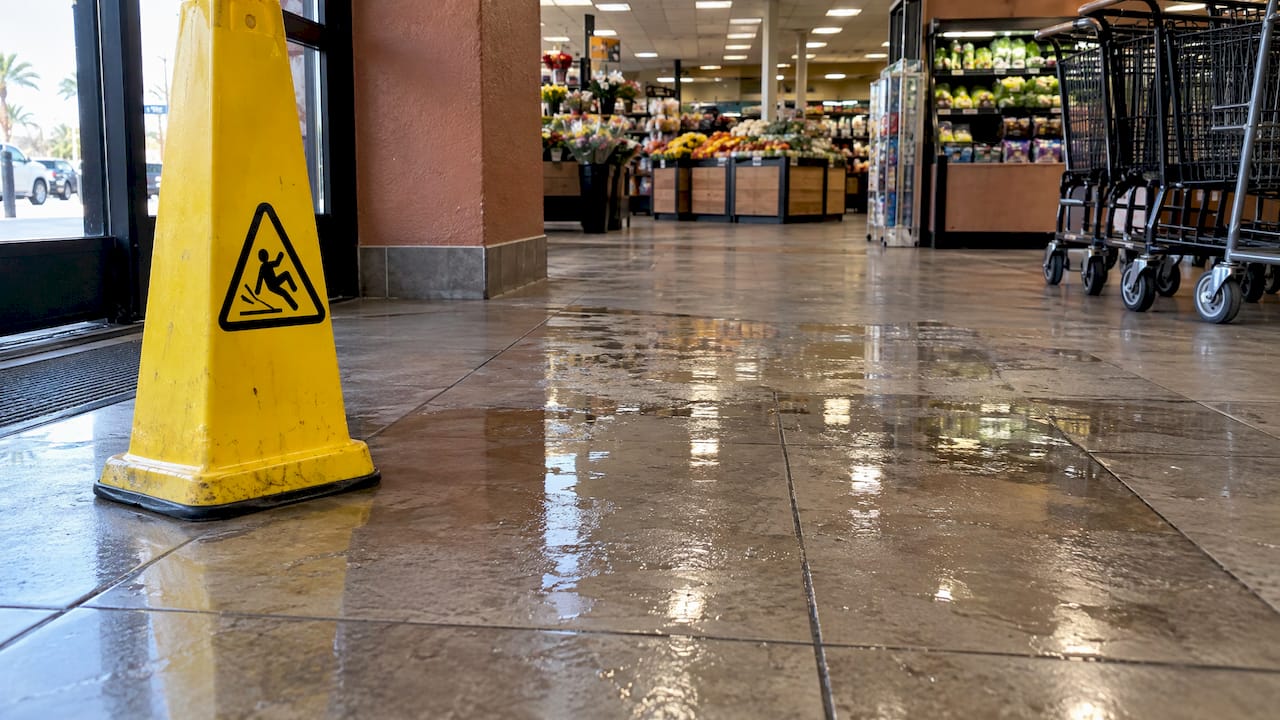
If you were hurt in a fall on someone else’s property in Las Vegas, a slip and fall lawyer can help you work out whether the owner is legally responsible, protect the evidence, and deal with the insurance company. Nevada does not make a property owner pay just because you fell. You generally have to show that the owner failed to use reasonable care and that the failure caused your injuries. This guide explains how those claims work, what to do in the first days, and when to bring in counsel.
Key Takeaways
- A fall on a property does not by itself prove negligence. Nevada courts look at whether the owner or business used reasonable care and knew, or should have known, about the hazard.
- Evidence disappears fast: spills get cleaned, cameras overwrite footage, shoes get worn. Documenting the scene and your injuries early protects your claim.
- Nevada reduces your recovery by your share of fault and bars it if you are more than 50% at fault, so how the accident is described matters.
- Most Nevada personal injury lawsuits must be filed within two years, and claims against government property have their own rules.
- Insurers start building their defense on day one. Talking to a lawyer before giving a recorded statement is a sound habit.
Table of Contents
- What counts as a slip and fall claim in Nevada
- What you have to prove: the hazard and the owner’s notice
- What to do after a slip and fall in Las Vegas
- Nevada comparative negligence: why your own fault matters
- What compensation may be available
- Deadlines and special rules
- How insurers handle these claims
- Where falls happen around Las Vegas and Nevada
- Our perspective
- Get your fall reviewed by Summit
- What to look for in a Las Vegas slip and fall lawyer
- FAQ
- Sources
What counts as a slip and fall claim in Nevada
A slip and fall claim is a type of premises liability case. It covers injuries caused by a dangerous condition on property: a wet floor, a torn carpet edge, a broken stair, poor lighting, a cracked walkway, loose debris in an aisle. The property can be a grocery store in Henderson, a hotel on the Strip, an apartment complex in North Las Vegas, a parking garage downtown, or a private home.
The starting point in Nevada law is that a business owes its patrons a duty to keep the premises reasonably safe. At the same time, the Nevada Supreme Court has said that an accident on the premises does not, on its own, establish negligence. That is why slip and fall cases turn on facts: what the hazard was, how long it was there, and what the owner did about it.
The State Bar of Nevada describes negligence in plain terms: the defendant owed you a duty, and acted or failed to act unreasonably in a way that caused your injuries. You prove it by a preponderance of the evidence, meaning it is more likely than not.
Who can be responsible
The answer depends on who controlled the space. Possible defendants include:
- The property owner
- A business tenant operating on the property
- A property management company
- A maintenance or cleaning contractor
- A hotel, resort or casino operator
- A homeowners association or apartment landlord
More than one party can share responsibility. Sorting out who had control of the area where you fell is often the first investigative step, and it is one reason early legal help matters in a city where large properties are run by layers of owners, operators and contractors. If your fall happened at a resort, our pages on hotel injury claims and casino injury claims cover those settings in more detail.
What you have to prove: the hazard and the owner’s notice
Most slip and fall disputes come down to notice. Did the owner know about the hazard, or should they have known?
The Nevada Supreme Court’s decision in Sprague v. Lucky Stores lays out the framework. If the owner or its employees created the dangerous condition, liability may follow directly. If someone else caused it, such as a customer who dropped a drink, liability generally requires that the business had actual or constructive notice and failed to fix the problem.
Actual and constructive notice
- Actual notice: an employee saw the spill, a customer reported it, or an earlier incident report exists.
- Constructive notice: the hazard was there long enough, or happened often enough, that a reasonable inspection routine would have found it.
In Sprague, the court found there were genuine factual questions about whether a continual build-up of debris put the store on constructive notice, and whether the store unreasonably failed to use devices such as skid mats to deal with a recurring problem. The lesson for injured people: a pattern can matter as much as a single moment. Past spills at the same spot, missing mats, skipped inspection logs and thin staffing can all help show that the danger was foreseeable.
“But it was obvious”
Defense lawyers often argue that you should have seen the hazard. In Foster v. Costco, the Nevada Supreme Court held that the open and obvious nature of a dangerous condition does not automatically relieve a landowner of the duty of reasonable care. Obviousness is relevant to whether the owner acted reasonably and to comparative fault, but it is not an automatic defense.
What to do after a slip and fall in Las Vegas
This part follows general practice rather than a single statute, so treat it as a practical checklist and adapt it to your situation.
- Get medical care first. Your health comes before any claim. Call 911 for serious pain, head impact, or inability to bear weight. Otherwise visit urgent care, an ER or your doctor the same day. Some injuries, such as concussions and soft tissue damage, show their full extent hours or days later. Tell the provider exactly how you fell and where it hurts, so the record matches what happened.
- Report the fall to the business. Ask a manager to make an incident report and request a copy. Note the name of the person you spoke with. Stick to facts and do not guess about causes or apologize.
- Photograph everything. Take pictures of the hazard, the surrounding area, warning signs or the lack of them, lighting, and your footwear. Wide shots and close-ups both help. Photograph your injuries over the following days as bruising develops.
- Identify witnesses. Get names and phone numbers of anyone who saw you fall or saw the hazard.
- Look for cameras. Las Vegas hotels, casinos, stores and garages are heavily monitored, and footage is often kept for a limited time. A prompt written request to preserve video is something a lawyer can send for you.
- Keep your shoes and clothing. Store them as they were, unwashed.
- Keep records. Save medical bills, discharge papers, pay stubs showing missed work, and a short daily journal of pain and limits.
- Be careful with insurers. An adjuster may call quickly, sound friendly, and ask for a recorded statement. You are not required to give one before you understand your options. Our guide to insurance adjuster tactics in Nevada explains what to expect.
- Stay off social media. Posts and photos can be read out of context.
Evidence preservation is part of the work
At Summit, evidence preservation guidance is part of how we help clients from the start. Surveillance video, maintenance logs, cleaning schedules, prior incident reports and employee training records can all be relevant, and they are in the property owner’s hands, not yours. Acting early gives you the best chance to secure them.
Nevada comparative negligence: why your own fault matters
Insurers frequently argue that the injured person was partly to blame: distracted by a phone, wearing the wrong shoes, walking too fast. Nevada follows a modified comparative negligence rule under NRS 41.141. According to Nolo’s Nevada summary, you can still recover if your share of fault is not greater than 50%, but your damages are reduced by your percentage. At 10% fault, a $100,000 award becomes $90,000. At 51% or more, recovery is barred.
That sharp cutoff explains why insurers push fault arguments hard. Every percentage point they assign to you comes off the check, and crossing 50% ends the claim. Details like how the floor was lit, whether warning cones were out, or whether the hazard was in an ordinary walking path all affect the fault split. Because Foster confirms that an obvious hazard bears on comparative fault rather than ending the case, those details are worth developing carefully.

What compensation may be available
The State Bar of Nevada says injured people can seek lost wages and benefits, past and future medical expenses, and pain and suffering. Funeral and burial expenses may be recoverable if the injury was fatal, and punitive damages may be awarded for particularly egregious conduct. The Bar frames recovery as an effort to put the injured person back where they would have been without the accident.
In practice, damages in a fall case often include:
| Category | Examples |
|---|---|
| Medical costs | ER visits, imaging, surgery, physical therapy, future treatment |
| Lost income | Missed work, reduced capacity, lost benefits |
| Non-economic harm | Pain, limits on daily life, loss of enjoyment |
| Death-related losses | Funeral and burial costs and losses to the family |
No lawyer can honestly promise a result. What a claim is worth depends on the injury, the medical evidence, the strength of the liability proof and the fault split. Falls can cause fractures, hip and spine injuries, head trauma and torn ligaments, and a long recovery often changes the value of a case. If a loved one died after a fall, see our wrongful death page.
Deadlines and special rules
The two-year clock
Most Nevada personal injury actions must be filed within two years. Nolo reports that the clock usually starts on the date of injury, although it may start later or pause in some circumstances. Waiting is risky even inside the window, because witnesses forget and video is deleted. Do not assume a later start date applies to you without advice.
Falls on government property
If you fell at a public building, on a sidewalk maintained by a city, or at a county facility in Clark County, different rules apply. Claims against government entities can involve pre-suit claim steps and caps on damages, and punitive damages are not available, according to Nolo. Legislative work-session materials for SB 245 show the cap on tort damages against government entities being addressed for causes of action accruing on or after July 1, 2019, so the figure has changed over time. Because notice requirements for public-entity claims can be strict, speak with an attorney quickly if the owner is a city, county or state agency.
How insurers handle these claims
Property insurers investigate slip and fall claims with the goal of limiting what they pay. Typical moves include asking for a recorded statement, requesting broad medical authorizations, pointing to pre-existing conditions, arguing the hazard was open and obvious, and offering a quick, low settlement before the full extent of your injuries is known.
Insurers in Nevada are also bound by rules about how they treat claims. The Nevada Unfair Claims Settlement Practices Act, NRS 686A.310, sets out unfair practices in handling and settling claims, and if an insurer commits one, a cause of action may be brought under the Act. If an insurer delays, denies without a reasonable basis, or lowballs a valid claim, our bad faith insurance practice addresses those situations.
Where falls happen around Las Vegas and Nevada
A Las Vegas claim has local features. Millions of visitors move through resorts, casinos, nightclubs, pools and parking structures, and the properties are large and run around the clock. Locals fall in grocery stores in Summerlin and Henderson, apartment complexes in North Las Vegas and Spring Valley, and shopping centers across Clark County. Hazards we see discussed in premises cases include wet marble after cleaning, pool decks, unmarked level changes, torn carpeting, ice or spills near entrances, and poor lighting in garages and stairwells.

Summit serves clients across Nevada, including Las Vegas, North Las Vegas, Henderson, Paradise and the wider Clark County area, as well as Washoe County, Reno and Carson City. For a broader look at how these cases work, read our guide on premises liability claims in Nevada. If the fall happened because of inadequate protection from crime rather than a floor hazard, negligent security may apply instead.
Our perspective
Slip and fall cases look simple from the outside: someone fell, someone owned the floor. In reality, they are won or lost on details the property owner controls. Who inspected the aisle, when, and what the logs say. Whether the camera footage still exists. How the incident report describes what happened.
Our approach is shaped by an understanding of how insurance companies defend these claims. Our team’s background includes insurance defense experience, so we know the arguments that will be made about notice, obviousness and your share of fault, and we prepare for them from the first day. We combine focused trial preparation with direct communication, so you know where your case stands and what comes next.
We cannot promise any outcome, and no honest firm can. What we can promise is personal attention, clear explanations and a case built as if it will be tried in front of a Clark County jury, because that is what makes a fair settlement more likely.
Travis
Get your fall reviewed by Summit
Summit Trial Attorneys represents people injured by negligence across Nevada, including slip and fall victims in Las Vegas. Our case review looks at what happened, who may be responsible and what evidence needs to be preserved now. We work on a contingency basis, so our fees come from a settlement or judgment in your case.

Start with a free case review, or read about our slip and fall practice first. If you were hurt in a car or on foot rather than inside a building, see our pages on car accidents and pedestrian accidents.
What to look for in a Las Vegas slip and fall lawyer
Whichever firm you choose, a few questions help you judge fit:
- Trial readiness. Insurers value cases differently when they know the firm will go to court.
- Premises experience. Notice, comparative fault and evidence preservation are specialized skills.
- Communication. Who will you actually talk to, and how often will you get updates?
- Fee structure. Ask for the contingency agreement in writing and read how costs are handled.
- Resources for large defendants. Resorts and national retailers have experienced defense teams.
FAQ
How long do I have to file a slip and fall claim in Nevada?
Most Nevada personal injury lawsuits have a two-year filing deadline, and the clock usually starts on the date you were injured, according to Nolo. Claims against government entities can have extra notice steps, so speak with an attorney quickly. Evidence is easier to secure early, long before the deadline.
Can I recover if I was partly at fault for my fall?
Often yes. Under NRS 41.141, Nevada reduces your damages by your percentage of fault and bars recovery only if you are more than 50% at fault, per Nolo’s summary. An open and obvious hazard does not automatically defeat a claim, as Foster v. Costco explains.
Do I need to prove the owner knew about the hazard?
Usually, yes, unless the owner or its employees created it. For hazards caused by others, Nevada law generally requires actual or constructive notice and a failure to fix the problem. Inspection logs, prior incidents and video often help show it.
What does it cost to hire Summit for a slip and fall case?
We handle injury cases on a contingency basis, meaning our fee is taken from a settlement or court award. We do not publish a fee schedule, so the best way to understand the terms for your case is to request a free case review.
Should I talk to the property’s insurance company?
You can report the incident, but think before giving a recorded statement or signing a broad medical release. Adjusters work to limit what the insurer pays. A lawyer can handle those communications so that nothing you say is used out of context.
Sources
- Sprague v. Lucky Stores, Inc. (Nevada Supreme Court, 1993)
- Foster v. Costco Wholesale Corp. (Nevada Supreme Court, 2012)
- Nevada Personal Injury & Accident Law, State Bar of Nevada
- Nevada Personal Injury Laws and Deadlines to File a Case, Nolo
- SB 245 work session document, Nevada Legislature, 2019
- Nevada insurance law overview, ALFA International
Recommended
- Las Vegas slip and fall attorneys
- Las Vegas casino injury attorneys
- Premises Liability Claims in Nevada: How They Work
- Las Vegas hotel injury attorneys
This article was written with the assistance of AI and should never be treated as legal advice. It is not 100% guaranteed to be correct and you should never fail to contact an attorney based on its contents.
Talk with Summit
If you have questions about an injury in Nevada, our team can discuss your situation.
Request a case reviewGeneral information only; this article is not legal advice and does not create an attorney-client relationship. Past results do not guarantee future outcomes.