
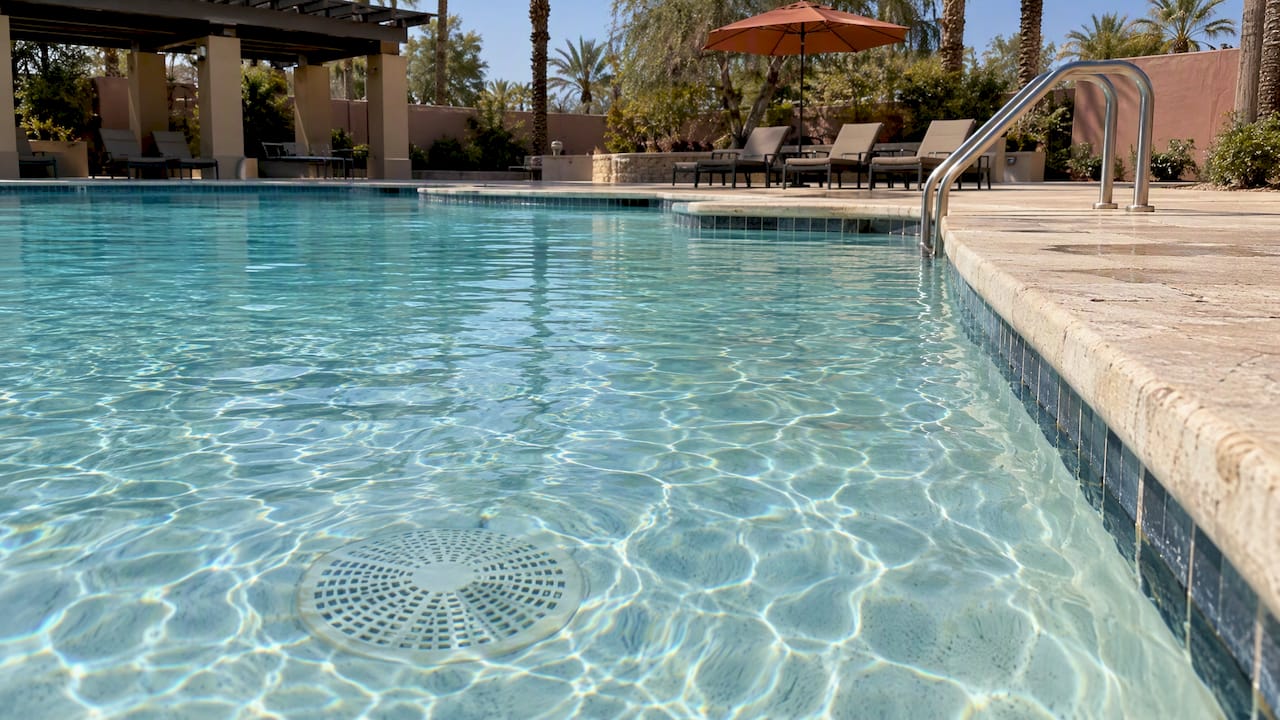
A swimming pool accident lawyer investigates why you or your child was hurt at a pool, identifies who was responsible for keeping it safe, and pursues compensation from that party and its insurer. In Nevada, that often means a hotel, resort, apartment community, homeowners association, or private homeowner. At Summit Trial Attorneys, we handle these cases for individuals and families across Las Vegas, North Las Vegas, Henderson, and the rest of Clark County, and we offer a free case review.
Key Takeaways
- Pool injuries range from slips and diving impacts to drain entrapment, chemical exposure, and drowning. Drowning can happen in seconds and is often silent, according to the CDC.
- Liability usually turns on who controlled the pool and whether that party failed to take reasonable care. Hotels, landlords, associations, pool operators, and equipment makers can all be involved.
- Filing deadlines and notice rules depend on the state and on who you are claiming against. Do not rely on a deadline you read online; have it checked for your situation soon after the accident.
- What you save in the first days (photos, names, medical records, the incident report) can shape the case later.
- No lawyer can promise a result. A good one can explain your options honestly before you commit to anything.
Table of Contents
- How pool accidents happen and the injuries they cause
- Who may be liable for a pool injury
- Safety rules that may matter to a claim
- What compensation may be available
- Deadlines and notice rules
- What to do after a pool accident
- How insurers handle pool claims
- Working with Summit Trial Attorneys
- Frequently asked questions
- Sources
How pool accidents happen and the injuries they cause
Most people picture drowning first, and it is the most serious outcome. The CDC reports that drowning is the leading cause of death for children ages 1 to 4 and the second leading cause of unintentional-injury death for children ages 5 to 14, and it warns that drowning can happen in seconds and is often silent (CDC Summer Swim Safety). Nonfatal drowning matters just as much. A CDC analysis of 2005 to 2009 data estimated an annual average of 5,789 emergency-department-treated nonfatal drownings, and 50.2% of those patients needed hospitalization or transfer (CDC MMWR). The CDC also notes that drowning injuries can cause brain damage and long-term disability.
Other common pool injuries include:
- Slips and falls on the deck. Wet concrete, missing slip-resistant surfacing, broken tiles, and poor drainage cause head injuries, fractures, and spinal damage. If the fall happened on a wet walkway or pool deck, our slip and fall work is closely related.
- Diving and shallow-water injuries. Unmarked depths, missing depth signs, and poorly placed diving boards can lead to spinal cord and brain injuries.
- Drain entrapment. The Consumer Product Safety Commission explains that suction entrapment can trap a child or an adult and cause hair entanglement, limb or body entrapment, evisceration, or entanglement of jewelry or bathing suits (CPSC pool safety guide).
- Chemical injuries. The CDC says pool chemical injuries lead to about 4,500 U.S. emergency-department visits each year, and over one-third involve children or teens (CDC pool safety guidelines).
- Water quality problems. The same CDC page explains that contaminated water can spread germs and that improper pH can irritate skin and eyes.
- Equipment failures. Slides, ladders, pool covers, heaters, and lifts can break or malfunction, which may bring a product liability claim against the manufacturer in addition to a claim against the property.
- Assaults and incidents at poolside venues. Crowded resort and club pools sometimes involve inadequate security or overserving. See our page on nightclub and dayclub injuries.
Who may be liable for a pool injury
Negligence is the usual legal theory. In general, a claimant must show a duty of care, a breach of that duty, causation, and injury or damages, as Chambers’ 2026 U.S. practice guide describes. Applied to a pool, that translates into practical questions: who owned or controlled the pool, who was responsible for maintaining it, and what did that party know or should have known about the hazard?
The answer depends on where you were hurt.
Hotels, resorts, and casinos
Las Vegas Strip and Paradise properties run some of the busiest pools in the country, and guests are often drinking, distracted, or unfamiliar with the layout. Liability questions include whether the property staffed enough lifeguards or attendants where it offered them, posted clear depth markings, kept decks in safe condition, and responded fast to an emergency. Our pages on hotel injuries and casino injuries explain how these claims work against large hospitality companies.
Apartment complexes, HOAs, and condominiums
In Henderson, North Las Vegas, Summerlin, and Enterprise, many residents live in communities with shared pools. The owner, landlord, management company, or association may be responsible for gates, locks, fencing, lighting, and repairs. A broken self-latching gate that a tenant reported weeks earlier is the kind of fact that matters.

Private homeowners
Guests hurt at a private home may be able to claim against the homeowner’s insurance. MoneyGeek reports that standard homeowners policies commonly include medical-payments-to-others coverage for smaller guest-injury claims, which does not require proving negligence, and personal-liability coverage for covered injuries and defense costs up to policy limits. Coverage depends on the policy, its exclusions, and the circumstances (MoneyGeek). Many people hesitate to bring a claim against a friend or relative. In practice, the claim is usually paid by the insurer, not by the person personally, though the details depend on the policy.
Pool contractors, service companies, and manufacturers
A company that installed a drain cover incorrectly, let chemical levels drift, or sold a defective ladder or cover can share responsibility. Our guide to premises liability claims in Nevada explains how property-based claims are built, and our article on gross negligence versus negligence covers how the level of fault can matter.
Safety rules that may matter to a claim
Safety laws and codes do not decide a case on their own, but a violation can be strong evidence that a pool operator did not act reasonably.
Federal drain-cover rules. The Virginia Graeme Baker Pool and Spa Safety Act requires pool and spa drain covers to meet the ASME/ANSI A112.19.8 standard or its successor, with the requirements codified at 16 C.F.R. part 1450. The CPSC states that since December 19, 2008, public pools and spas must use compliant anti-entrapment drain covers, and a single blockable drain or closely spaced multiple drains also requires a secondary anti-entrapment device or system (CPSC drain cover guidance).
Fencing. The CDC states that a four-sided isolation fence separating the pool from the house and yard reduces a young child’s drowning risk by 83% compared with three-sided property-line fencing (CDC risk factors). When a child gets into a pool through a missing, broken, or unlatched barrier, the barrier’s condition is often central to the case.
State and local codes. Nevada counties and cities, including Clark County, Las Vegas, North Las Vegas, and Henderson, as well as Washoe County and Reno in the north, have their own codes and health-district rules for public and residential pools. We review the rules that apply to the specific property when we evaluate a case.

What compensation may be available
A successful claim may seek recovery for losses tied to the injury. Depending on the facts, that can include:
- Emergency care, hospitalization, surgery, rehabilitation, and future medical needs
- Lost income and reduced earning capacity
- Pain, suffering, and loss of enjoyment of life
- Costs of long-term care when a brain injury or spinal injury causes lasting disability
- In a wrongful death case, funeral costs and the family’s losses, which can include loss of support and companionship
The amount depends on the injuries, the proof of fault, the insurance available, and the law that applies. Claims against government entities, for example a public pool run by a city or county, can come with special rules. In Utah, for instance, the administrative code sets a damages cap for qualifying personal-injury claims against a governmental entity at $827,000 for one person in one occurrence (Utah Admin. Code R37-4-2). That is a Utah rule, not a Nevada one, but it shows why the identity of the defendant changes the math. Ask a lawyer how a claim against a public entity would be treated where you live.
If a loved one died, our wrongful death attorneys can explain who may bring the claim and what it can cover. No amount of money replaces a child or a spouse. The purpose of a claim is accountability and financial stability for the family.
Deadlines and notice rules
This is where people lose claims they could have brought. Chambers cautions that limitation periods are specific to the jurisdiction and the type of claim, and that product-liability filing periods can range from one to six years depending on the cause of action and place (Chambers). A single national deadline does not exist.
Claims against public bodies add a second layer. A claim against the United States must first be presented to the appropriate federal agency, and a suit generally cannot seek more than the amount presented (28 U.S.C. § 2675). In New York, the Court of Appeals has required strict compliance with the statutory content requirements for claims against the state, including time, place, nature of the claim, injuries, and the total sum claimed (Kolnacki v. State of New York). If the pool belongs to a city, county, school district, or public university, assume there may be a short notice requirement and ask a lawyer immediately.
The safe approach: treat every deadline as shorter than you think, and have a Nevada attorney confirm the one that applies to you as early as possible.
What to do after a pool accident
- Get medical care. Drowning and near-drowning can cause delayed complications, and head or spine injuries are not always obvious. Follow your doctor’s instructions and keep every record.
- Report the incident in writing. Ask the hotel, property manager, or association for an incident report and keep a copy. Do not sign anything or give a recorded statement to an insurer before you have talked with a lawyer.
- Photograph everything. Capture the deck, the water, the depth markers, the gate, the fence, the drain, warning signs, lighting, and your injuries, as soon as you can and again as healing progresses.
- Collect names. Get contact details for witnesses, lifeguards, staff, and anyone who helped.
- Keep the physical evidence. Hold on to clothing, swimwear, footwear, and any broken equipment. Do not repair or throw away a defective product.
- Ask that video be preserved. Hotels and apartment communities may overwrite security footage quickly. A lawyer can send a preservation letter promptly.
- Stay off social media. Posts and photos can be used by an insurer to dispute your injuries.
- Speak with a lawyer before settling. Early offers can be low, especially before the full extent of an injury is known.
How insurers handle pool claims
Insurers look for ways to reduce what they pay. Common arguments: the swimmer was careless, the hazard was obvious, the warning signs were visible, or the injuries were caused by something other than the accident. Our team includes lawyers who understand how insurance defense works from the inside, and we use that experience to anticipate those arguments and prepare for them.
Sometimes the problem is the insurer’s own conduct. The American Bar Association explains that bad-faith rules vary by state and may arise under common law, statute, or refusal-to-settle doctrines, and that the requirements for proving bad faith and the remedies available differ by jurisdiction (ABA overview). If an insurer refuses a reasonable settlement within limits or drags out a clear claim without good reason, talk with a lawyer about whether the insurer’s handling is itself a problem.
Our perspective on pool cases
Pool cases are rarely simple, and they are rarely about one bad moment. They are about decisions made before anyone got in the water: how many staff were on the deck, whether the gate latched, whether a drain cover was replaced, whether a complaint was ignored.
We came to personal injury with a deep understanding of how insurance companies defend these claims. That shapes how we work. We build the case as if it will be tried, because insurers pay more attention to a file that is ready for a courtroom. We also keep our communication direct, so you know where your case stands and what the options are, without legal jargon.
We cannot promise any outcome, and no honest lawyer can. What we can promise is careful preparation, plain answers, and personal attention to your family’s situation. Our firm has handled significant cases, including a $41 million product defect settlement, but every case turns on its own facts and past results do not predict future ones.
Travis
Working with Summit Trial Attorneys
We represent people injured in Las Vegas, North Las Vegas, Henderson, and across Clark County, and we take cases elsewhere in Nevada, including Washoe County and Reno. We work on a contingency basis, which means our fees come from a settlement or judgment in your case. Our review covers who owned and controlled the pool, what evidence exists and how to preserve it, which insurance may apply, and what the next step should be.
If you were hurt at a hotel pool, a resort, a nightclub or dayclub, or an apartment community, start with a free case review. You can see everything we handle on our practice areas page.

Other firms sometimes ask us to serve as Nevada trial counsel for a case that is filed here. Information for referring and out-of-state firms is on our FAQ page.
Frequently asked questions
How much does a swimming pool accident lawyer cost?
At Summit, our fees come from a settlement or judgment, so you do not pay an hourly fee up front. The free case review is where we explain how our fee arrangement works for your case, in writing, before you decide to hire us.
Can I sue a hotel or resort for a pool injury in Las Vegas?
Yes, you may be able to, if the injury was caused by the property’s failure to use reasonable care. That can include missing staff, unsafe decks, broken equipment, or poor security. Whether you have a claim depends on the facts, so keep the incident report and photos, and have a lawyer review them.
What if my child was hurt in a neighbor’s or a rental community’s pool?
A property owner or landlord may be responsible when a child gets into a pool through a broken gate or fence or an unlatched door, depending on the facts and the law. The condition of barriers is often a central question. Preserve photos of the fence, gate, and latch, and speak with a lawyer quickly about any notice or filing deadlines.
Is there one deadline for pool accident claims across the country?
No. Filing periods depend on the state and on the type of claim, and claims against government-owned pools can have shorter notice requirements. Have a Nevada attorney check the deadline for your situation as soon as you can.
Does homeowners insurance pay for a guest’s pool injury?
Often it can, depending on the policy. Many policies include medical-payments coverage for smaller guest claims and liability coverage for covered injuries up to the policy limits, but exclusions and conditions vary. A lawyer can review the policy and the circumstances.
Sources
- CDC: Summer Swim Safety
- CDC MMWR: Drowning, United States, 2005 to 2009
- CDC: Guidelines for Keeping Your Pool Safe and Healthy
- CDC: Risk Factors for Drowning
- CPSC: Steps for Safety Around the Pool
- CPSC: Pool and Spa Drain Cover guidance
- Chambers: Product Liability & Safety 2026, USA
- MoneyGeek: Does Home Insurance Cover Swimming Pool Injuries?
- American Bar Association: Categories of Bad Faith
- Utah Admin. Code R37-4-2
- 28 U.S.C. § 2675
- Kolnacki v. State of New York
Recommended
- Las Vegas casino injury attorneys
- Las Vegas Pedestrian Accident Lawyers
- Las Vegas nightclub & dayclub injury lawyers
- Las Vegas Uber & Lyft Accident Lawyers
This article was written with the assistance of AI and should never be treated as legal advice. It is not 100% guaranteed to be correct and you should never fail to contact an attorney based on its contents.
Talk with Summit
If you have questions about an injury in Nevada, our team can discuss your situation.
Request a case reviewGeneral information only; this article is not legal advice and does not create an attorney-client relationship. Past results do not guarantee future outcomes.