Serious injuries after Nevada desert recreation
Summit Trial Attorneys represents riders, passengers, and families after serious ATV, UTV, and side-by-side injuries in Las Vegas, Reno, Henderson, and communities throughout Nevada. Some clients were visiting desert recreation areas. Others were local riders on familiar trails.
A confidential conversation can cover who was driving, who owned or rented the vehicle, what the medical record shows, and whether product, maintenance, rental, or other negligence questions may belong in the review. Nevada counsel only.
If you need a starting point, use the free case review page or call or text 702.789.4200.
How ATV, UTV, and side-by-side crashes often happen
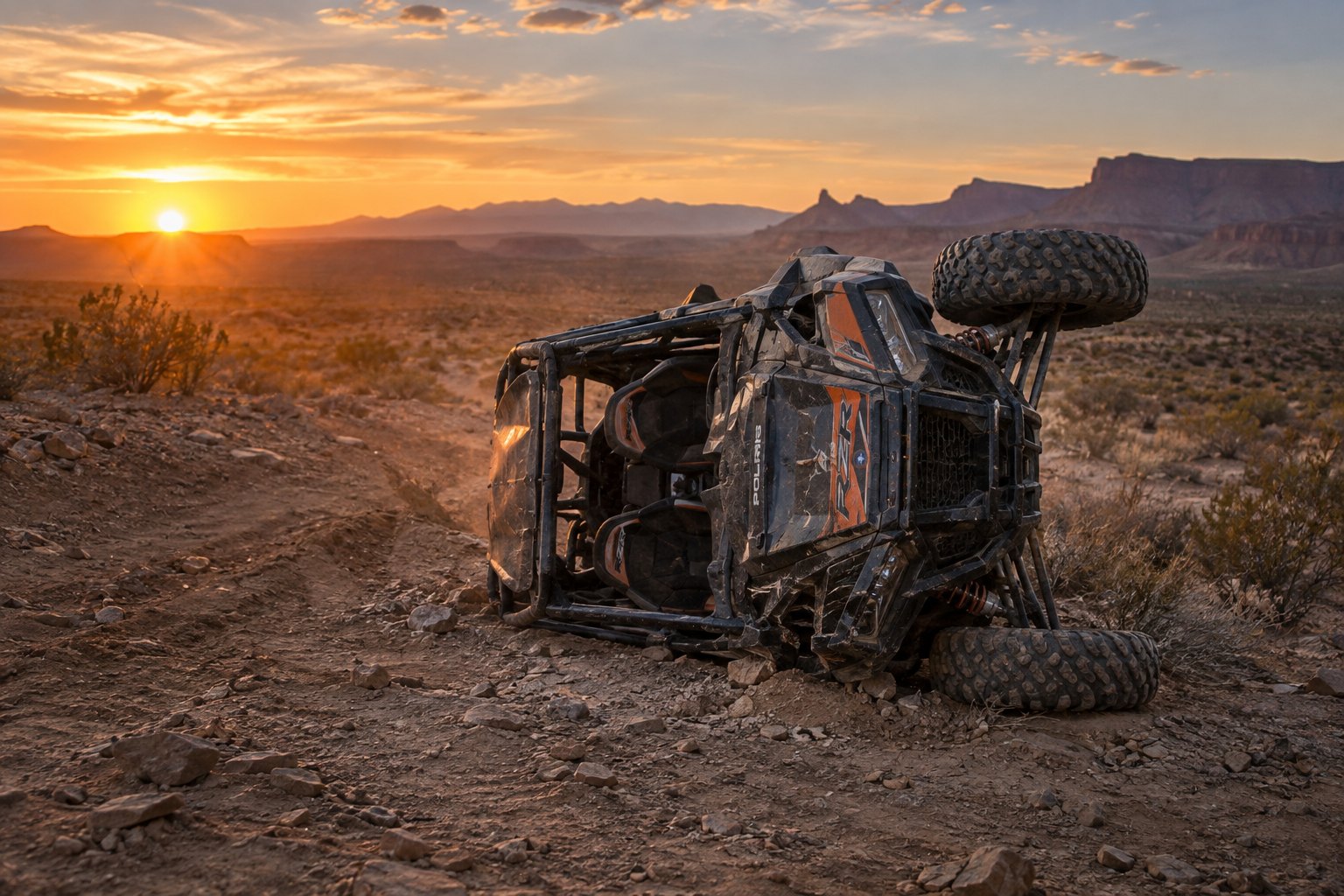
Off-highway vehicles can cause serious injury when they roll, eject occupants, collide with another vehicle or fixed object, or leave riders without adequate protection in a crash. Public safety reporting from the U.S. Consumer Product Safety Commission describes overturns, collisions, and ejections as recurring hazard patterns across ATVs and recreational off-highway vehicles.
In its 2024 OHV report, CPSC staff associated thousands of reported deaths with off-highway vehicles over a recent multi-year window, and estimated hundreds of thousands of emergency-department-treated injuries across a five-year span. A CPSC special study of recent injury cases found overturns and ejections in a large share of the surveyed incidents. Those figures describe industry-wide risk. They are not a claim about any single brand, trail, or crash.
UTV rollover and side-by-side injury patterns
Recreational off-highway vehicles, often called ROVs or side-by-sides, are built with steering wheels, side-by-side seating, and rollover protective structures. CPSC materials on ROV safety emphasize seat belts, helmets, keeping limbs inside the vehicle, and staying off paved roads. Historical CPSC staff reviews of fatal ROV investigations have reported that more than two-thirds involved rollover, and that more than 80 percent of decedents in the reviewed sample were fully or partially ejected.
- Rollovers on turns, slopes, soft sand, or uneven desert terrain
- Ejection or partial ejection from a side-by-side cabin
- Collisions with other riders, trucks, or stationary objects
- Crush injuries when a vehicle lands on an occupant
- Questions about design, warnings, restraints, maintenance, or rental practices when the facts support them
These are industry-wide risk patterns, not accusations against any single manufacturer. Brand names appear on this page only as examples of vehicles people commonly ride.
Injury types after an off-road crash
ATV and UTV crashes can produce a wide range of serious injuries. Federal reporting has long associated OHV emergency visits with fractures, head and neck trauma, internal injuries, and other acute harm. In Nevada desert riding, heat, distance from care, and delayed rescue can compound the medical picture.
- Head, neck, and spinal injuries
- Chest, abdominal, and internal injuries
- Fractures of the arms, legs, pelvis, or ribs
- Crush and soft-tissue injuries after a rollover or pin
- Road rash, burns, and secondary trauma after ejection
- Fatal injuries that lead families to a wrongful death review
Every case turns on its medical record. Summit organizes treatment history, future care needs, and the ways an injury changed work, family life, and daily function.
Who may be liable after an ATV or UTV crash
Liability depends on the facts. In general terms, a Nevada review may look beyond the rider alone when the evidence supports it.
Manufacturer and product liability OHV questions
Some matters raise design, manufacturing, or warning questions about the vehicle, restraints, roll structure, handling, or related components. Summit also handles product liability work and has handled and won serious product and off-road vehicle injury cases. A product theory is never assumed. It has to be supported by the vehicle, the evidence, and Nevada law.
Property owners, trail operators, and other riders
Depending on the setting, a review may consider a private property owner, an event organizer, or another rider whose conduct contributed to the crash. Public land recreation has its own rules and agency context. This page does not claim that any particular trail or recreation area is unsafe.
Rental companies and maintenance
Tour and rental fleets are common around Las Vegas desert recreation. A review may ask what the renter was told, what condition the vehicle was in, how it was maintained, and what restraints or gear were provided. Purchase records, rental agreements, and maintenance notes can matter.
Insurers often raise shared-fault arguments early in off-road cases. Nevada uses a modified comparative-fault approach described in plain language on Summit's Nevada comparative negligence guide.
Vehicles people commonly ride, including Polaris and other OHV brands
People searching for an ATV accident lawyer in Nevada, a UTV rollover lawyer, or a Polaris accident lawyer often rode an ATV, a UTV, or a side-by-side recreational off-highway vehicle. Common examples include models from Polaris (such as RZR and similar side-by-sides), Can-Am, Honda, Yamaha, Kawasaki, and CFMoto. Listing those names is category context only. Summit does not use this page to allege that any brand is defective in general.
Public recall notices from CPSC and manufacturers appear from time to time across the OHV industry. A recall or safety notice can be relevant evidence in a specific case, but it is not proof by itself that a particular crash was caused by a defect. If a product question arises, the analysis stays tied to the vehicle, the evidence, the supply chain, and Nevada law, not to marketing claims about a brand.

Nevada desert OHV recreation and why the setting matters
Southern Nevada draws riders to dune systems, washes, and marked trail networks managed in part by the Bureau of Land Management and described by the Nevada Off-Highway Vehicles Program. Public BLM pages for areas such as Nellis Dunes and Logandale Trails describe popular OHV destinations near the Las Vegas Valley. Heat, soft sand, washouts, dust, limited cell service, and unfamiliar terrain can raise the stakes when something goes wrong.
This page is not a claim that any particular Nevada trail is unsafe. It is a reminder that serious medical and legal consequences can follow an off-road crash, including for visitors who rented a side-by-side for a desert tour.
What to do after an ATV or UTV accident in Nevada
Practical steps can protect both health and evidence. This is general information, not legal advice.
- Get medical care first, even if symptoms seem delayed
- Photograph the scene, terrain, vehicle position, restraints, and any visible conditions if it is safe
- Preserve the vehicle when possible. Do not discard parts, helmets, nets, belts, or damaged gear
- Save rental agreements, purchase records, maintenance notes, tour waivers, witness names, and medical records
- Be careful with recorded statements to insurers before you understand the facts
- Call or text Summit at 702.789.4200 or text 702.789.4200 for a confidential review
How Summit helps with ATV and UTV injury cases
Summit focuses this work. The firm has handled and won serious product and off-road vehicle injury cases and builds these files with a trial-ready record in mind. That can mean preserving the vehicle, organizing medical and financial losses, identifying insurance layers, and evaluating whether negligence, product, rental, or related theories fit the facts.
Past results are not a prediction of future results. Summit does not invent verdict dollars on this page. When an insurer delays or undervalues a claim, the team may also discuss bad faith insurance questions. When a fatal injury occurs, families can review a related wrongful death path. Product-only questions may also belong on the product liability page.

Call or text for a confidential ATV or UTV case review
If you or someone close to you was hurt in an ATV, UTV, or side-by-side crash in Nevada, start with a clear conversation. Call or text 702.789.4200, send a text to 702.789.4200, use the free case review page, or the contact form. Se habla español.
Preparation is visible in the details.
Every serious injury matter is built from records, questions, and a clear understanding of the life behind the claim.


Before you contact the team.
These answers are general information. They are meant to help you prepare for a conversation, not to replace advice about your situation.
Who can Summit help after an ATV or UTV crash?
Summit can review matters for riders, passengers, and families after serious ATV, UTV, or side-by-side injuries in Las Vegas, Reno, Henderson, and communities throughout Nevada. Facts matter, including who was driving, who owned or rented the vehicle, and whether a product or property issue may be involved.
What should I do after an ATV or UTV accident in Nevada?
Get medical care first. Photograph the scene, the vehicle, and any visible conditions if it is safe. Preserve the vehicle when possible and do not discard parts, helmets, or gear. Save rental agreements, purchase records, maintenance notes, witness names, and medical records. Call or text Summit at 702-789-4200 for a confidential review. This is general information, not legal advice.
How long do ATV or UTV injury claims usually have in Nevada?
Many Nevada personal injury actions are described under a common two-year filing period, but other clocks can apply depending on the parties, the product, a death claim, or notice issues. Do not rely on a general description for your facts. Speak with Nevada counsel promptly. This is general information, not legal advice.
How does shared fault work in a Nevada off-road crash?
Nevada uses a modified comparative-fault approach. A claimant's recovery can be reduced by that person's share of fault and may be barred if that share is greater than the other side's combined fault. Insurers often raise shared-fault arguments early in off-road cases. Read the firm's guide at Nevada comparative negligence. This is general information, not legal advice.
Does Summit handle product questions involving ATVs and UTVs?
Yes. Summit focuses serious product and off-road vehicle injury work and has handled and won serious product and off-road vehicle injury cases. A review may consider design, manufacturing, warning, maintenance, rental, or negligence questions depending on the facts. Brand names appear only as vehicles people commonly ride, not as accusations. Nevada counsel only.
What is a UTV rollover injury claim?
A UTV or side-by-side rollover claim may involve injuries after the vehicle overturns on a turn, slope, soft sand, or uneven terrain. Federal reporting has long tied recreational off-highway vehicle fatalities to rollover and ejection patterns. Whether a claim involves negligence, a product question, a rental issue, or another theory depends on the facts. This is general information, not legal advice.
Can a manufacturer or rental company be involved after an OHV crash?
Sometimes. Depending on the evidence, a review may look at the manufacturer or supply chain, a property owner or trail operator, another rider, a rental company, or maintenance practices. Brand names on this page are category context only. Summit does not claim any brand is defective in general. Nevada counsel only.
Do you handle cases outside Las Vegas?
Summit serves clients across Las Vegas, Reno, Henderson, and communities throughout Nevada. Contact the team to discuss the location and details of your case.
Public resources for your research.
These links are provided for general information and are not legal advice. Agency reports and guidance can change, so discuss your specific situation with counsel.
Related practice areas
Contexts that often sit next to an ATV or UTV review.