A premises liability claim holds a property owner or occupier responsible when an unsafe condition, or the way the property is run, injures a lawful visitor. To win, you generally have to show that the owner owed you a duty of care, breached it, and caused your injury and real damages. In Las Vegas that covers everything from a spill in a grocery aisle to an assault in a poorly guarded parking garage. This guide explains how these claims are built, where they fail, and what to do in the first days after you are hurt.
TL;DR
- A premises liability claim rests on four elements: duty, breach, causation and damages. In many places you also must show the owner knew, or should have known, about the hazard.
- Property owner liability is not limited to wet floors. In Nevada, an owner’s own conduct that increases risk can also support a claim, and negligent security is a common example.
- Cases are usually lost on proof of notice, not on the injury. Photos, incident reports and preserved video matter early.
- Filing deadlines are short, and claims against government property can carry notice deadlines of only a few months.
- Insurance usually pays these claims, which means the insurer’s defense strategy shapes the case from day one.
Table of Contents
- What a premises liability claim actually is
- The four elements you have to prove
- Notice: the element that decides many cases
- Nevada specifics worth knowing
- Who can be responsible
- Your status as a visitor
- What to do after an injury on someone’s property
- What damages can include
- Why insurance sits at the center of these claims
- Why claims fail, and how to avoid it
- Our perspective
- Talk to us about your claim
- FAQ
- Sources
What a premises liability claim actually is
Premises liability is the part of personal injury law that deals with injuries on someone else’s property. Justia’s overview describes it as holding the parties in control of property responsible for keeping it reasonably safe. Nolo calls it a broad, catch-all term, and that is accurate: the label covers many different fact patterns under one negligence framework.
Falls are the obvious starting point. According to 2023 CDC data, unintentional falls were the leading cause of nonfatal emergency department visits in the United States, at 8,870,302 visits across all ages. Not every one of those happened on someone else’s property, and not every one gives rise to a claim. But it shows how common the underlying events are.
Common examples of premises liability claims include:
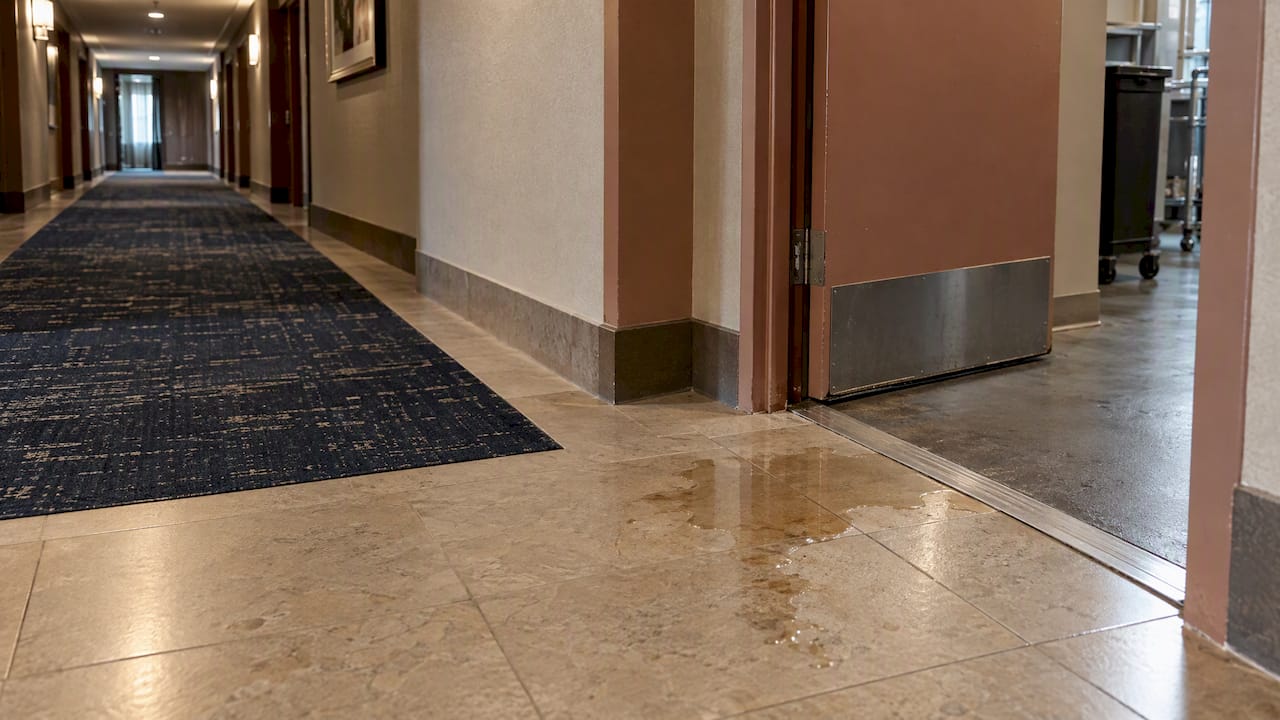
- Slips, trips and falls from spills, torn carpet, broken stairs or poor lighting. See our page on slip and fall cases.
- Injuries to guests at resorts and hotels, such as pool accidents or unsafe walkways. See hotel injury claims and casino injury claims.
- Assaults and other crimes that a property owner should have anticipated and guarded against: negligent security.
- Injuries at crowded venues, including nightclubs and dayclubs.
- Dog bites on a residence or business property.
- Accidents on off-road vehicle rental or tour properties: ATV and UTV accidents.
A related but separate path is a defective product. If a hazard came from a product rather than the premises, the claim may be a product liability case instead, or in addition.
The four elements you have to prove
Premises liability cases are negligence cases. Justia lists the four elements a plaintiff must prove: the defendant owed a duty of care, the defendant breached that duty, the breach proximately caused the injury, and the plaintiff suffered actual damages. Many jurisdictions also require proof that the owner had actual or constructive notice of the hazard.

Duty
Duty asks whether this owner or occupier owed this visitor reasonable care. In Nevada, as the court discussed in FCH1, LLC v. Rodriguez, owners owe entrants a duty of reasonable care. The duty is not absolute. Courts can narrow it in settings such as sporting events or recreation, where certain risks are known, obvious and unavoidable parts of the activity.
Breach
Breach is where you show what a reasonably careful owner would have done and did not. That might be inspecting more often, cleaning a spill, repairing a handrail, adding lighting, posting a warning or staffing security. Written policies, inspection logs and staffing schedules are often the best evidence here, and they sit in the owner’s hands.
Causation
You must connect the hazard to the injury. If you fell on a wet floor but the medical records show a pre-existing condition, the defense will argue the floor was not the cause. Prompt medical care and consistent records answer that.
Damages
Damages are the real losses: medical bills, lost income, future care, pain and suffering. In a wrongful death case, the family’s losses are different, and we handle those through our wrongful death practice.
Notice: the element that decides many cases
The hazard was there, you were hurt, and it still may not be enough. Owners are generally not insurers of every visitor’s safety. The question is whether the owner knew about the danger (actual notice) or whether it existed long enough that a reasonable owner would have found it (constructive notice).
A Fifth Circuit decision, a Texas-law slip case against a retail chain, shows how this plays out. The court affirmed summary judgment because there was no evidence the store had knowledge of the hazard. That is a federal case under another state’s law, not Nevada authority, but the lesson travels: a claim can fail on notice alone.
This is also why security video is less of a silver bullet than people assume. Footage may show the fall without showing how long the spill sat there. Proving the time element often takes more: employee schedules, sweep logs, witness statements, or video from earlier in the day. In our experience, the earlier the preservation request goes out, the better the odds that this kind of evidence still exists.

Nevada specifics worth knowing
The owner’s conduct, not only the condition of the land
In Nevada, premises liability is not confined to static conditions like a puddle or a broken step. The FCH1 decision is the leading discussion of owner duty in a resort setting, and it recognizes that active conduct by an owner that increases the risk of harm can matter. That widens the field beyond the classic slip and fall, and it matters in a city built on hotels, casinos, clubs and large events.
Foreseeability in negligent security cases
When a guest is attacked, liability often turns on foreseeability. As industry reference material on premises liability frames it, liability is based on whether the owner failed to keep conditions safe or warn of hazards. In a security case that comes down to what the owner knew or should have known about prior incidents, and whether it took reasonable steps in response: lighting, cameras, locks, trained staff. We explain this further on our negligent security page.
The open and obvious defense
Expect the defense to argue that the danger was so apparent that you should have avoided it. According to Justia, plaintiffs often answer by showing the owner could have anticipated that visitors would be distracted or unable to navigate the hazard safely, so the owner still had to fix it. A display that draws your eyes away from a step down, or a crowded walkway, are the kinds of facts that matter.
Shared fault
Insurers routinely try to assign part of the blame to you: you were on your phone, wearing the wrong shoes, walking too fast. Nevada applies comparative fault rules, which can reduce or even bar recovery depending on the percentage assigned. We will walk through how that applies to your facts in a case review rather than give you a one-size number here.
Deadlines
Filing deadlines are strict. Justia notes that premises liability limitation periods typically run between one and four years depending on the state, and that claims against government entities often require notice within only a few months. If your injury happened on city, county or state property, that is urgent. Ask a Nevada attorney for the exact deadline for your claim as soon as you can. Do not wait until treatment ends.
Who can be responsible
Property owner liability is not always one person. Depending on the facts, responsibility may sit with:
- The landowner or landlord
- A tenant or business operating on the property
- A property management company
- A contractor responsible for maintenance, cleaning or security
- A government entity, which brings special notice rules
Identifying every party early matters, because each has its own insurance and its own records. A hotel may blame a contracted security company, and the security company may blame the hotel. A good investigation pins down who controlled the area where you were hurt.
Your status as a visitor
How the law treats you can depend on why you were on the property. Customers and invited guests are generally owed the strongest duty of care. Rules for people who enter without permission differ and are narrower. Status categories vary by state and have been refined by courts over time, so do not assume how yours falls. Tell your attorney exactly why you were there and who invited you.
What to do after an injury on someone’s property
- Get medical care first. Your health comes first, and records created right away tie the injury to the event.
- Report the incident. Ask the manager or owner to make a written report, and ask for a copy. Do not guess about fault in the report.
- Photograph everything. The hazard, the surrounding area, lighting, signs, your shoes, your injuries. Do it before the scene changes.
- Get names. Witnesses, employees on duty and any security staff.
- Ask that video be preserved. Many systems overwrite footage on a schedule. A written preservation request from an attorney is more effective than a verbal ask at the front desk.
- Keep the clothing and footwear you wore, unwashed.
- Be careful with insurers. The property’s insurer may call within days and ask for a recorded statement. You are not required to give one before you have advice.
- Do not post about it on social media.
If you want a second set of eyes on the evidence, you can request a free case review.
What damages can include
Recoverable losses in a successful claim can include current and future medical expenses, lost wages and reduced earning capacity, and non-economic harm such as pain, suffering and loss of enjoyment of life. The value depends on the severity of injury, the quality of liability evidence, how fault is divided, and the available insurance. We do not promise a number, and anyone who does at the first call is guessing.
Why insurance sits at the center of these claims
Most premises claims are paid through insurance. Justia notes that homeowners, renters and commercial general liability policies typically cover them. That means your opponent in practice is often an adjuster trained to limit exposure. Early lowball offers, requests for broad medical releases, and arguments about the timeline of the hazard are standard moves.
When an insurer refuses to deal fairly with a valid claim, there may be a separate issue: bad faith insurance practices.
Why claims fail, and how to avoid it
| Common weak point | Why it hurts | What helps |
|---|---|---|
| No proof of how long the hazard existed | Notice is not established | Preserve video, logs, staff schedules early |
| Delayed medical care | Gaps let the defense blame other causes | See a doctor promptly, follow treatment |
| Missed notice deadline | Claim can be barred | Get deadline advice right away |
| Recorded statement to insurer | Casual remarks used against you | Get advice before speaking |
| Assuming the owner is automatically liable | Duty and notice still must be proved | Build the case element by element |
| Weak expert support | Opinions seen as speculative | Use experts with a clear method and basis |
On experts: according to the Nevada Supreme Court’s discussion, what counts is the methodology and purpose of the testimony, not whether an expert used particular magic words. A security consultant or engineer who grounds an opinion in research and the facts of the property is far stronger than one who speculates.
Our perspective
We came to injury law with a view of how the other side works. Summit Trial Attorneys draws on former insurance defense experience, and we know how a defense file is built: the early recorded statement, the argument that the hazard was obvious, the push to shift fault to the injured person, the quiet waiting for a deadline or a video loop to run out.
That shapes how we handle a premises case. We start with evidence, because the evidence is what disappears. We ask who really controlled the space and who had the records. We prepare every case as one that may be tried, because insurers pay attention to that. And we talk with clients directly, so you know where the case stands and what comes next.
We handle serious injuries and the cases that come from them, from falls and negligent security to wrongful death. Our results include a $41 million product defect settlement. We do not treat any case as a template, and no past result guarantees a future one.
Talk to us about your claim
If you were hurt on someone else’s property in Las Vegas, North Las Vegas or elsewhere in Nevada, we will review what happened, explain whether the facts fit a premises claim, and tell you what to preserve right now. You can start with a free case review or browse the injury types we handle. We take injury cases on a contingency basis, so our fee comes from a settlement or judgment.
FAQ
Are premises liability cases hard to win?
They can be, mainly because of notice. You have to show the owner knew or should have known about the hazard, and that is often where cases are lost. Strong early evidence, such as video, incident reports and witness names, makes a real difference.
How long does a premises liability lawsuit take?
It depends on how serious the injuries are, how much is disputed and how the insurer responds. Many claims are resolved by negotiation, while others go through litigation and trial. We can give you a realistic outlook after reviewing your records and the evidence.
What is the difference between premises liability and a slip and fall?
Slip and fall describes how you were hurt. Premises liability is the legal theory that holds an owner responsible. A fall is one common type, but assaults, pool accidents, dog bites and other injuries can also be premises claims.
Can I still recover if I was partly at fault?
Often you can, but your share of fault may reduce what you recover, and in some situations it can bar the claim. Insurers push hard on this point. A Nevada attorney can tell you how the rule applies to your facts.
Sources
- Premises Liability Law, Justia Personal Injury Law Center
- What is Premises Liability? Nolo
- 10 Leading Causes of Nonfatal Emergency Department Visits, CDC WISQARS, 2023
- FCH1, LLC v. Rodriguez, Nevada Supreme Court
- Fifth Circuit unpublished opinion on summary judgment in a premises liability claim
- Premises Liability, Insurance Risks Database
Recommended
Talk with Summit
If you have questions about an injury in Nevada, our team can discuss your situation.
Request a case reviewGeneral information only; this article is not legal advice and does not create an attorney-client relationship. Past results do not guarantee future outcomes.