
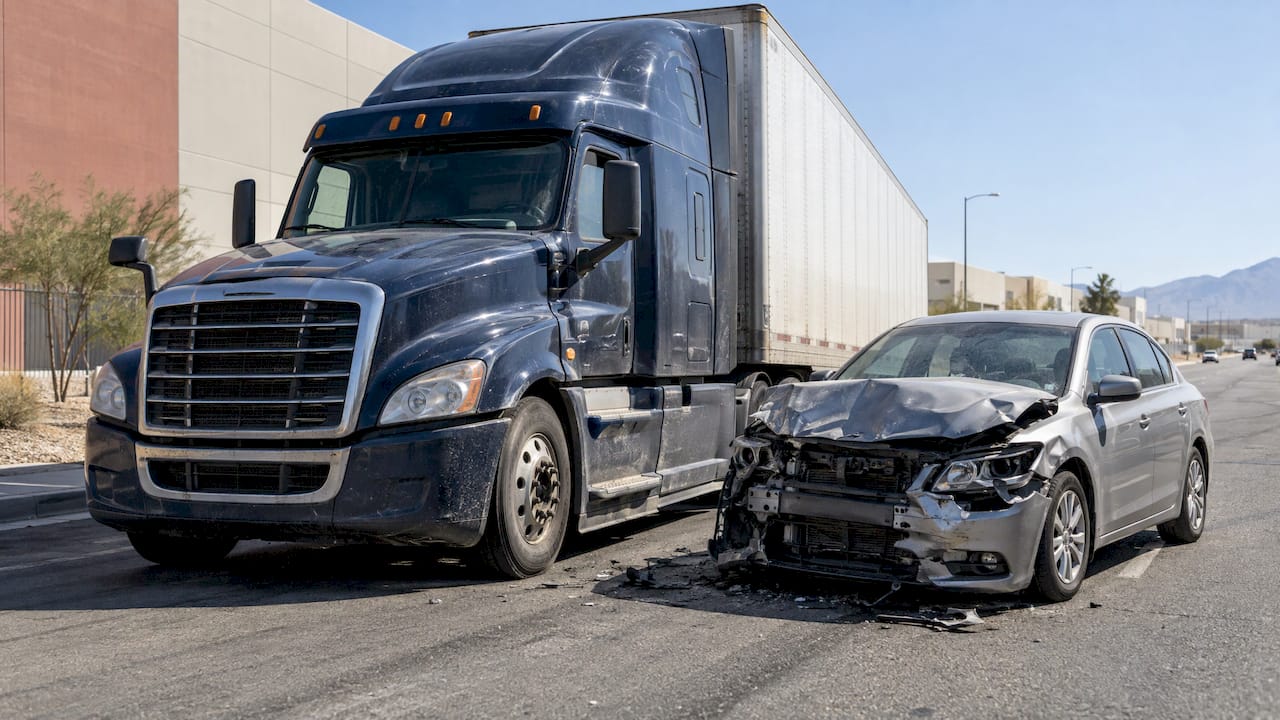
After a truck collision in North Las Vegas, the company name on a door may be only one part of the picture. The driver, vehicle, trailer and delivery paperwork can point to different businesses. Sorting those details out starts with the records, not an assumption about who is responsible.
Summit Trial Attorneys reviews semi-truck crash matters involving Nevada injuries. This guide explains how to organize what you already have and the questions to bring to a conversation with the team.
Start with the exact location and report number
A highway collision, a warehouse entrance and a neighborhood delivery stop can involve different witnesses and records. Write down the street or highway, direction of travel, nearest intersection or exit, and approximate time. Keep the responding agency's name and the incident number together. Our North Las Vegas accident guide provides a starting point for local records.
In an emergency, call 911 and follow responders' instructions. Do not enter traffic, approach damaged equipment or delay medical attention to collect evidence.
Identify the truck without guessing who owns it
If you already have photographs or an information exchange, look for the truck's license plate, company name, USDOT number and any separate trailer number. Record the names exactly as shown. Keep the source image rather than relying only on a typed note.
The federal FMCSA SAFER Company Snapshot offers a public carrier lookup by USDOT number, MC/MX number or company name. It displays identifying information and safety-record summaries. A lookup is a starting point for identifying a carrier; it does not establish who caused a particular crash, available insurance or the value of a claim.
Tell the team if the truck was making a delivery, leaving a work site, changing lanes or turning across your route. Distinguish what you saw from what another person later told you. You do not need to determine whether a driver was an employee or contractor before asking for a review.
Records to discuss early
- Your own records: original photographs, dashcam files, messages, the report number and witness contact information.
- Vehicle information: truck and trailer identifiers, the location of damaged vehicles, tow receipts and any inspection or repair paperwork you received.
- Possible company records: driver logs, dispatch messages, vehicle data, maintenance records and available camera footage. Their existence and relevance need to be checked.
- Nearby sources: a business, residence or another vehicle that may have recorded the area. Note the location rather than assuming footage exists or that you can access it yourself.
Ask which records may need a preservation request and who may control them. Do not alter files or attempt to extract data from someone else's equipment. Our truck-crash evidence guide explains these record categories in more detail.
Keep insurance contacts organized
Save each adjuster's name, company, claim number and written correspondence. Make clear whether the contact is from your insurer or another party's insurer. Bring any statement request, release, settlement offer or document with a stated response date to the discussion.
A disagreement about an offer does not, by itself, establish bad faith. If you have questions about your own insurer's handling of a claim, Summit's insurance-dispute information explains the kinds of records a review may involve. Specific rights, reporting obligations and deadlines require review of the policy and circumstances.
Describe the injury and expenses accurately
Bring the names of your medical providers, treatment records you can access, bills, time missed from work and any written recommendations for future care. Separate expenses already incurred from estimates or possibilities. Treatment decisions belong with your medical providers.
A photograph of a damaged truck, a carrier's size or another person's settlement does not establish what your case is worth. The team would need to review the facts, records and applicable coverage. No outcome or recovery amount is promised.
Questions for the first conversation
- Which company and vehicle details still need to be confirmed?
- Are any records or response dates time-sensitive?
- What additional information would help assess the potential case?
- Who would communicate with me, and what happens after the initial review?
- What would the written fee agreement say about fees and case costs?
You do not need a complete file to ask for a free case review. Share the crash date, location and a brief description, including anything you are uncertain about. Filing deadlines vary with the claim and circumstances; request a case-specific assessment rather than calculating one from a general article.
Common questions
What if I only know the name on the truck?
Start with that name and any photos or paperwork. Explain where you saw it. The team can discuss which additional identifiers may help distinguish the carrier from a different business.
Do I need the police report before contacting Summit?
You can ask for a review while the report is pending. Keep the report number and investigating agency's name if available, and tell the team which records you already have.
Does Summit handle a workers' compensation claim?
Summit does not handle workers' compensation. If an injury happened while working, say so during intake so the team can distinguish that issue from any potential claim involving another party. This article does not determine whether such a claim exists.

Talk with Summit
If you have questions about an injury in Nevada, our team can discuss your situation.
Request a case reviewGeneral information only; this article is not legal advice and does not create an attorney-client relationship. Past results do not guarantee future outcomes.