Fault is a fact question, not a slogan.
Nevada car accident fault gets decided with evidence, not with who called 911 first or who cried harder on the shoulder of I-15. Civil fault asks whose negligence caused the collision and in what shares. That analysis can include more than two drivers. It can include an employer, a rideshare company, a maintenance contractor, or a defective part.
This guide is general information for crashes in Las Vegas, Henderson, Reno, and the rest of Nevada. It is not advice about your intersection. Summit Trial Attorneys is Nevada counsel: Renee Finch, NSBN 13118, and Jaclyn Kliewer, NSBN 14898. Call Call or text 702.789.4200 or write intake@stattorneys.com.
The first-hour checklist still belongs on what to do after a car crash. This page is about how fault gets built after that hour.
The police report is a start, not a verdict.
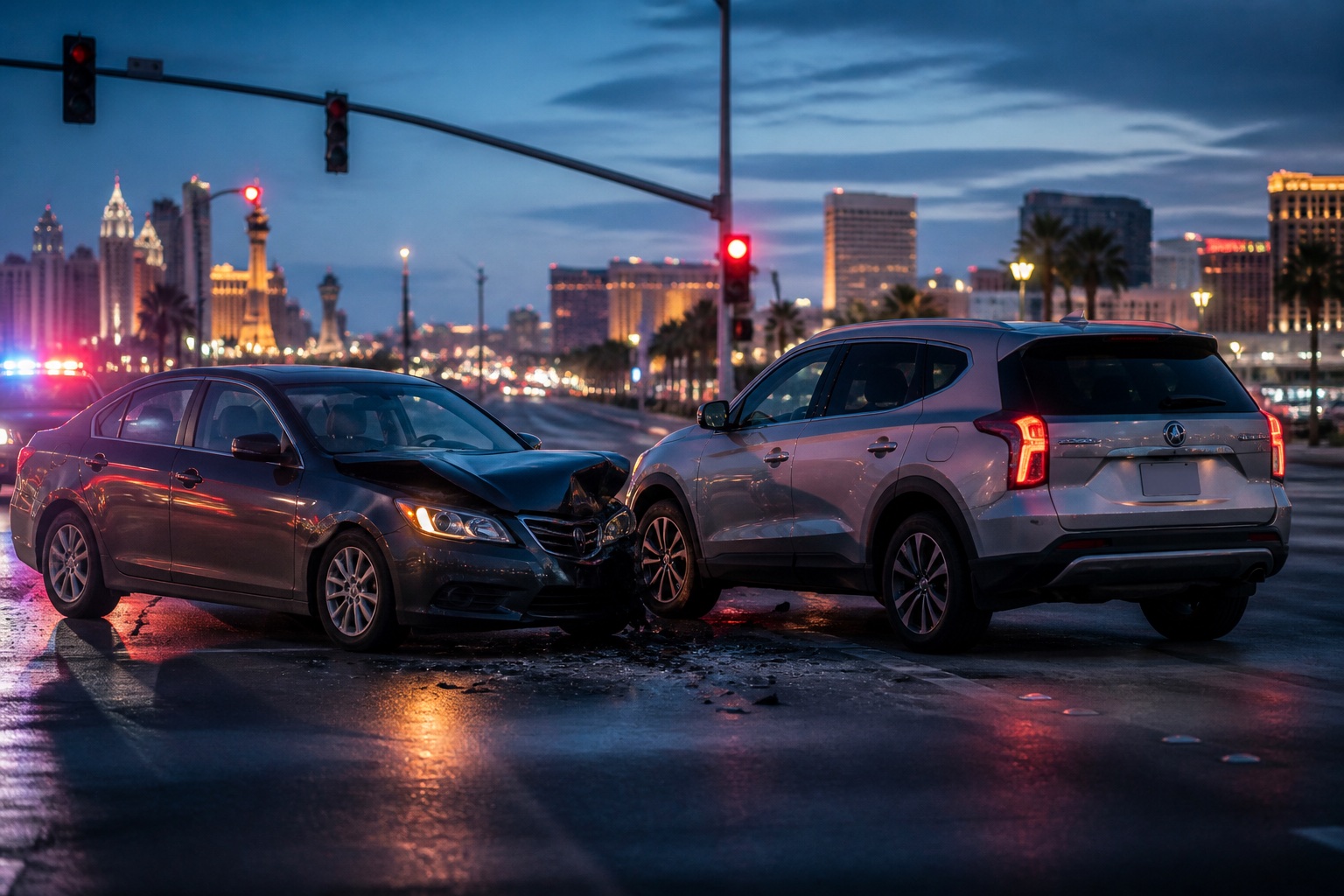
Metro, Nevada Highway Patrol, and city departments write crash reports under time pressure. Officers interview whoever is still on scene. They diagram what they can see. They may issue a citation. That paper matters. Insurers read it. So do later lawyers. It is still one officer’s snapshot.
Reports miss the car that left. They miss the light cycle you actually had. They sometimes assign the wrong lane on a wet Beltway diagram. Get the report. Read it. Correct obvious identity errors in writing. Do not treat a checked box as the end of Nevada car accident fault.
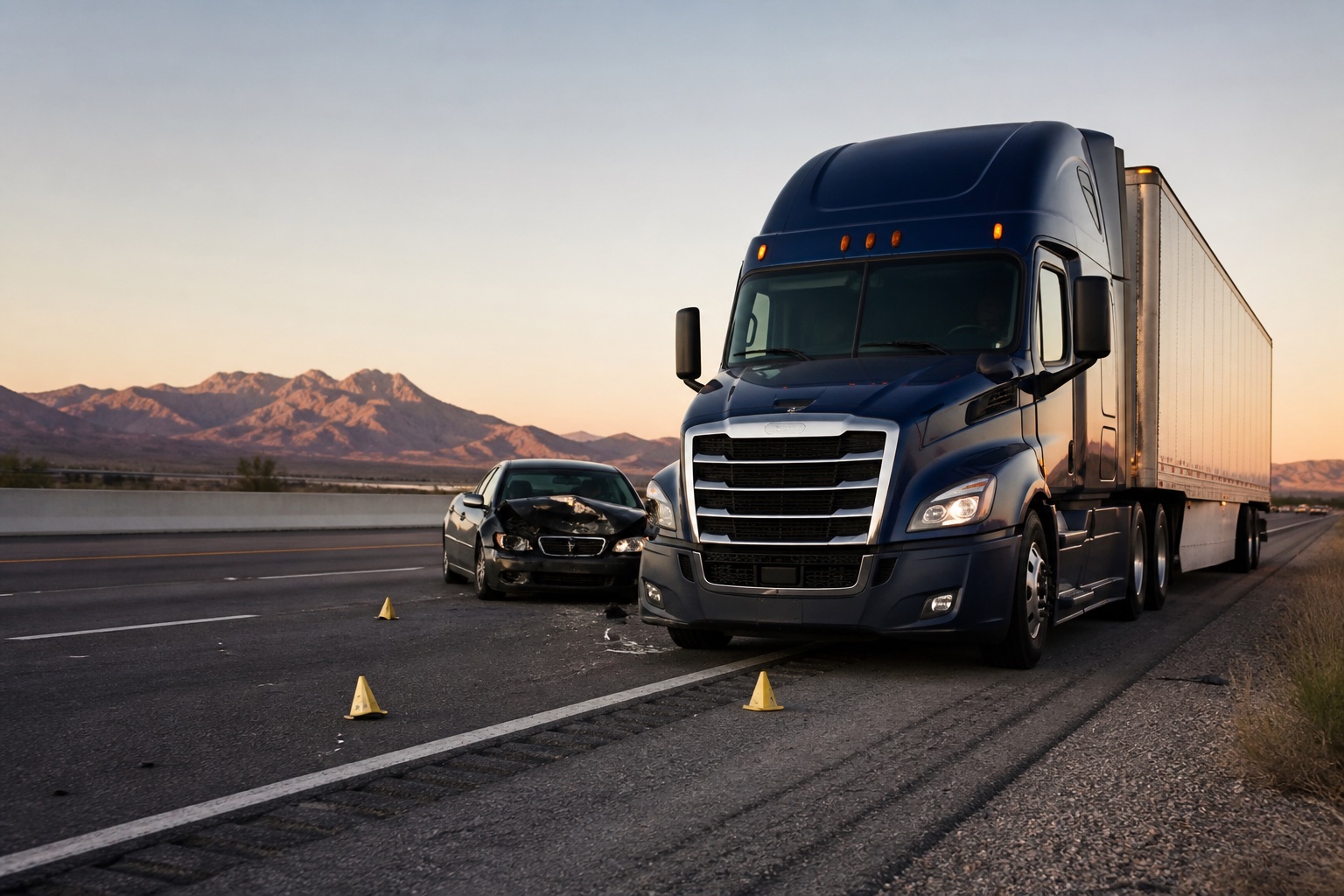
If a commercial truck is in the file, the record is larger than a local crash form. Hours-of-service data, ECM downloads, and cargo can matter. Read Nevada semi-truck crash evidence and our semi-truck crash page.

Cameras, phones, and the physical cars.
Las Vegas is dense with cameras that nobody thinks to ask for on night one: hotel porte-cocheres, casino garages, traffic cameras, and other drivers’ phones. Those files overwrite. A preservation request is ordinary, not dramatic.
The cars themselves are evidence. Crush, airbag control modules, tire marks, and final rest positions tell a quieter story than “he came out of nowhere.” Photograph more than feels polite. Include a landmark. A crumpled bumper without a street sign is hard to place months later.
Witnesses who do not want to stay
Tourists leave. Rideshare passengers close the app. A valet goes off shift. Names, badge numbers, trip numbers, and nearby businesses are the difference between a he-said file and a file with a third voice. Write them down before you accept a ride from the scene.
Statements that become the official story.
The other driver’s insurer may call while you are still in urgent care. The question set is designed to lock a narrative: speed, distraction, “any pain right now,” “could you have stopped.” You can share identifying and insurance information without narrating the crash on a recorded line. Courtesy apologies become quotes.
Your own carrier may have a cooperation clause. That is a different conversation. If you are unsure which caller is which, pause. The same caution lives in the crash-checklist guide and on bad faith insurance when a first-party claim stalls.
Comparative fault is how Nevada does the math.
Nevada uses a modified comparative-negligence rule. Recovery can be reduced by your percentage of fault and barred if your share is greater than the defendants’ combined share. That is why insurers fight over ten percentage points that look small on a spreadsheet and large in a serious injury file.
An adjuster’s opening allocation is an opening allocation. It is not a jury finding. Scene proof, medical proof, and the absence of a recorded “I’m fine” all feed that fight. The companion explainer is our guide to Nevada comparative negligence, and the rights overview is understanding your rights.
Fault can also sit with more than the other driver: an employer, a missing stop sign, a tire, an airbag that did not do its job. Those theories belong on product liability when the hardware failed.
What to bring if fault is already being argued.
- The crash report, citation, and any correction you submitted
- Photographs of vehicles, the roadway, signals, and injuries
- Names of officers, witnesses, tow drivers, and rideshare trip numbers
- A list of every insurer who has called, and whether a statement was recorded
- The date of the crash, because the Nevada personal injury statute of limitations does not pause for a fault dispute
Summit will look at the record you actually have, not the story an insurer prefers. No one can promise a result from a first call. The office is at 8488 Rozita Lee Ave, Building 3, Suite 100, Las Vegas, NV 89113.
Bring the report and the photographs. We will tell you whether Summit may be able to help. Past results do not predict your case.
Free case reviewQuestions people bring to the first call.
These answers are general information. They are meant to help you prepare for a conversation, not to replace advice about your situation.
If the police cited the other driver, is fault finished?
A citation and a crash report are useful. They are not a civil verdict. Insurers, and later a jury, can still argue a different allocation. Keep the report. Do not assume it ends the discussion.
What if both drivers tell a different story?
Then the file turns on independent proof: damage, photographs, cameras, and witnesses who were not in the collision. Conflicting stories are common on the Strip and the freeways.
Can I still have a claim if I was partly at fault?
Nevada uses modified comparative negligence. Recovery can be reduced by your percentage and barred if your share is greater than the defendants’ combined share. A first split is not a verdict.
The other driver fled or had no insurance. Does fault still matter?
Yes. Your own uninsured-motorist coverage, if you have it, still asks who caused the crash. Hit-and-run and no-insurance files need the same scene work, plus prompt notice to your carrier.
Keep reading.
Other Summit guides that sit next to this one.