
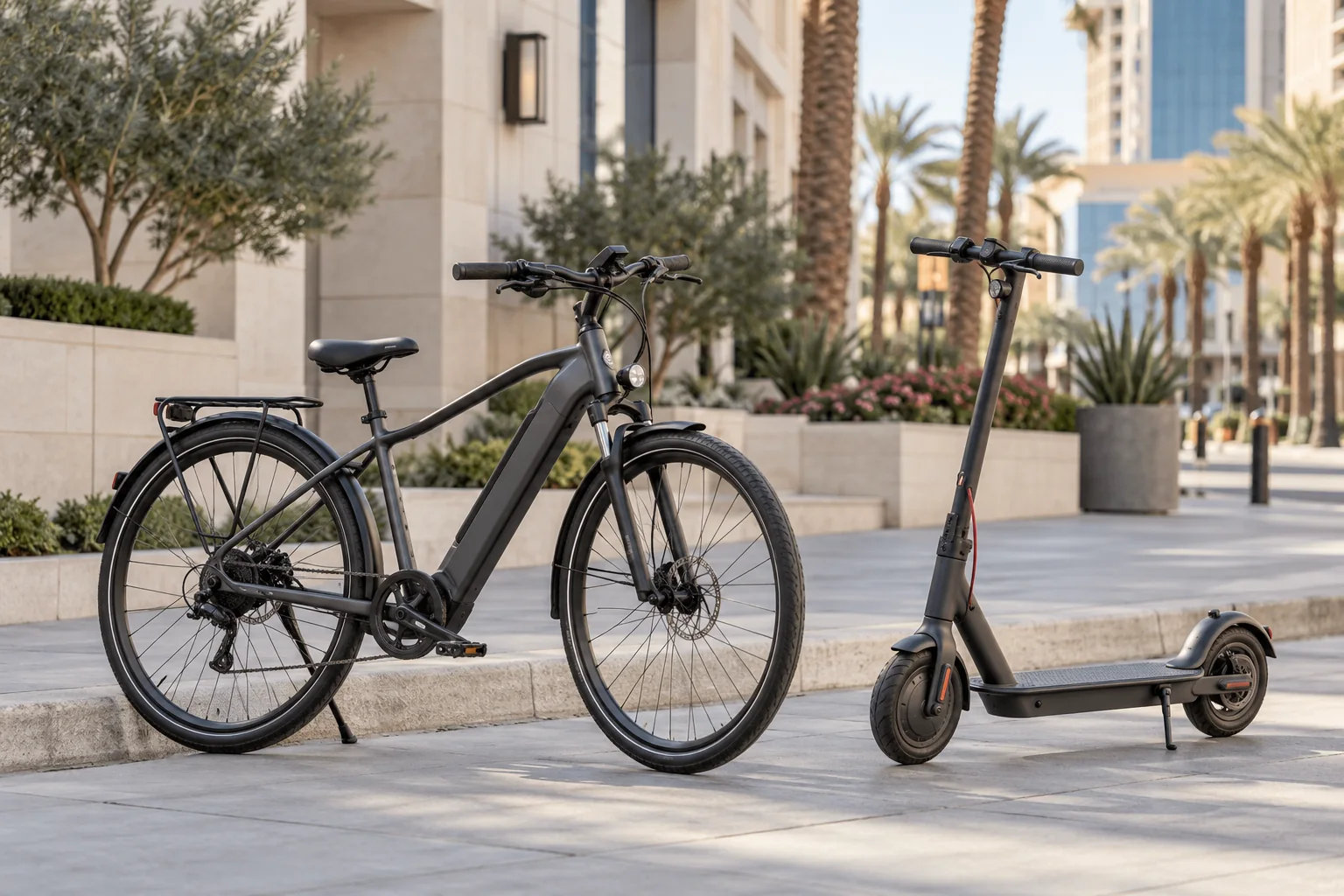
Start with what matters
A small vehicle can leave a complicated injury claim.
A driver turns across a bike lane. A rental scooter’s brakes do not respond. A pedestrian is struck outside a hotel. These events can involve very different evidence and insurance questions, even when the injuries look similar.
Summit Trial Attorneys reviews e-bike and electric scooter injuries in Las Vegas and throughout Nevada. The first questions are practical: what happened, who controlled the vehicle or property, and what records can still be preserved? You do not need to know the legal category before asking for a free case review.
In the Las Vegas valley, the exact location matters. A resort driveway, a neighborhood intersection in Summerlin, and a shared-use path in Henderson can present different conditions and rules. Save the street address or map pin, direction of travel, signs, and whether the crash occurred in a roadway, bike lane, path, or parking area.
What to do after an e-bike or scooter accident
- Put safety and medical care first. Move out of traffic if you can do so safely. Call 911 for an emergency. Follow medical guidance and keep your treatment records.
- Document the scene without putting yourself at risk. Save photographs of the vehicle, damage, lane markings, signals, road surface, and nearby businesses. Get witness contact information and the crash-report number if available.
- Save the ride’s digital trail. Keep rental receipts, trip times, app messages, the device ID, and screenshots of information already available to you. Do not delete or alter trip records.
- Preserve the equipment. Avoid repairing, modifying, or discarding the bicycle, scooter, helmet, or damaged parts before discussing preservation. For a rented device, record its identifying details and promptly ask about preservation.
- Ask about nearby video promptly. A store, hotel, residence, or vehicle may have recorded the event. Footage can be overwritten. Note where cameras are located so preservation requests can be directed to the right people.
Safety comes before evidence: do not handle or transport a smoking, hot, leaking, or otherwise hazardous battery. Contact emergency services for an active hazard.
Who may be responsible?
The investigation should follow the facts rather than assume every scooter injury is a claim against a rental company.
A driver or another road user
Turning across a rider’s path, opening a door, backing out, or failing to yield may raise negligence questions. Video, sight lines, witness accounts, and vehicle damage help test each account. See our car accident and pedestrian injury information.
A rental or maintenance business
If a rented device failed, maintenance records, prior complaints, inspection practices, and the rental terms may matter. A rental receipt or app account does not by itself establish that a business caused the injury.
A manufacturer or seller
A suspected brake, steering, frame, or battery defect can require a product liability investigation. Preserve the model and serial number, purchase documents, and the device itself when safe. An expert may need to distinguish a preexisting defect from damage caused by the collision.
A party responsible for a dangerous condition
A surface defect or obstruction may require review of who controlled the location, what notice existed, and what duties applied. A public roadway and private property raise different legal questions; a hazardous condition alone does not establish a valid claim.
E-bike, scooter, or moped: the distinction matters.
Nevada defines electric bicycles and electric scooters separately. An e-bike has operable pedals and must meet the statutory motor and class requirements. A stand-up scooter is not automatically treated as a moped, and a high-powered device marketed as an “e-bike” may not meet the legal definition. Keep a photo of the manufacturer’s label and note any modifications. See Nevada’s vehicle definitions.
State law also allows local regulation of scooter use and some e-bike paths. Do not assume that permission to ride in one place applies to every sidewalk, resort property, or trail. The location and rules in effect when the crash occurred should be checked. See NRS 484A.469 and 484A.4695.
A riding-rule violation can be relevant to a negligence claim, but an insurer’s accusation is not a final fault determination. Our Nevada comparative negligence guide explains shared-fault questions.
Insurance, injuries, and the cost of recovery
Depending on the evidence and applicable law, a claim may address medical expenses, lost income, future care needs, and pain and limitations caused by the injury. Keep bills, work restrictions, and a record of how recovery affects ordinary activities. A meaningful evaluation needs more than the first emergency-room bill.
Coverage can depend on the device, the person or business involved, and the actual policy language. Do not assume that your auto insurance, a driver’s policy, or the rental app automatically covers every loss. Save all policies and insurer correspondence for review. See our guide to talking with an insurance company after an accident.
Injured while visiting Las Vegas?
Returning home does not erase what happened in Nevada. Keep the ride records and local report alongside your follow-up treatment records. Summit can review a Nevada injury even if you now live elsewhere. Our guide for injured Las Vegas visitors explains how to organize the next steps.
Summit’s Nevada team includes Renee M. Finch and Jaclyn Kliewer. Start with the crash location, approximate date, device type, and a brief description. Do not send confidential medical records through an unsecured message; the team can explain how to provide documents.
E-bike and scooter injury questions
Can I bring a claim if no car hit me?
Possibly. A crash involving faulty brakes, a damaged riding surface, or a negligently maintained rental may call for a different investigation. A fall alone does not establish liability; the cause, responsible party, and available evidence matter.
Does renting a scooter mean I gave up my rights?
Do not assume that. Save the rental agreement, receipt, device ID, and any incident messages. A lawyer can review any waiver, arbitration terms, insurance provisions, and the facts before assessing your options.
What if the insurer says I was partly at fault?
That allegation does not decide the claim. Nevada generally reduces negligence damages by your share of fault and bars recovery if your fault is greater than the combined fault of the defendants. Product-defect claims can involve different rules. The evidence and legal theory need individual review.
Can Summit help after I return home from Las Vegas?
Summit reviews injuries that happened in Nevada, including claims involving visitors who have returned home. Keep your local treatment records and the Nevada crash information together. This does not mean the firm is licensed in every state.
How long do I have to file an injury lawsuit in Nevada?
Many negligence-based personal injury lawsuits have a two-year filing period under NRS 11.190(4)(e). Exceptions and other requirements can change the analysis. An insurance claim is not the same as filing a lawsuit, so ask for advice about your actual deadline promptly.
Can I contact Summit if I was walking and a scooter hit me?
Yes. Describe the rider, device, location, witnesses, and injuries. A pedestrian injury may involve a rider’s conduct, a business, or a product issue; responsibility and insurance cannot be assumed just from the type of vehicle.
Legal sources & further reading
Published October 15, 2026. General information, not legal advice. The law and facts of an individual case control; no outcome is guaranteed. Images on this page are custom AI-generated illustrations and do not depict a client or an actual incident.